

KURO BRI
Black Brick & Brick Tile Kurobri Black Brick (BK)(KURO BRI)
Recommended Joint Width and Estimated Usage
- Exterior Wall ○
- Interior Wall ○
- Interior Floor ×
- Exterior Floor ×
- Slip Resistance -
- Frost Resistance △


How to Read the Icons
○ = Suitable / △ = Suitable with conditions / × = Not suitable / - = Not applicable
- Exterior Wall ○ Exterior wall areas of buildings and houses (please consult us separately regarding soffits and ceilings).
- Interior Wall ○ Interior wall areas of buildings and houses (bathroom walls, kitchen backsplashes, toilet walls, shop walls and other relatively low wall areas. Please consult us separately regarding soffits and ceilings).
- Interior Floor × Interior floor areas that do not get wet (kitchen floors, indoor toilets, indoor shop floors and other areas walked on in shoes or slippers, where the floor is not exposed to rainwater or other moisture).
- Exterior Floor × Exterior floors of buildings and houses, and floors walked on in shoes that get wet or where rainwater is carried in (including interior floors such as building lobbies and house entrances). Please consult us separately regarding public exterior areas such as parks and pavements.
- Slip Resistance - A measure of the slip resistance of floor tiles. This site lists either the C.S.R. value or the DIN 51130 rating. Note on DIN 51130: the higher the R value, the less slippery the tile. In Europe, tiles rated R10 or higher are recommended for outdoor use.
- Frost Resistance △ Indicates whether the tile can be used in cold regions and other environments where temperatures fall below freezing. When used together with Repel S (penetrating water repellent), the tile can also be used in cold regions.
CAN'BRICK
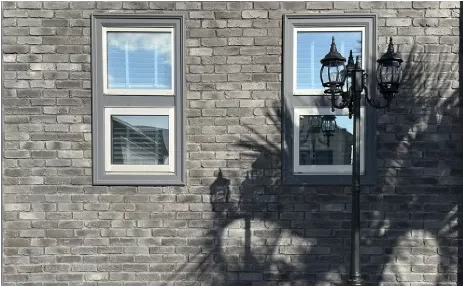
A brick tile that recreates deep, rich black brick: CAN'BRICK KURO BRI – Kurobri (BK). Hints of firing color and pale gray showing through the black give it a warm, nostalgic depth.
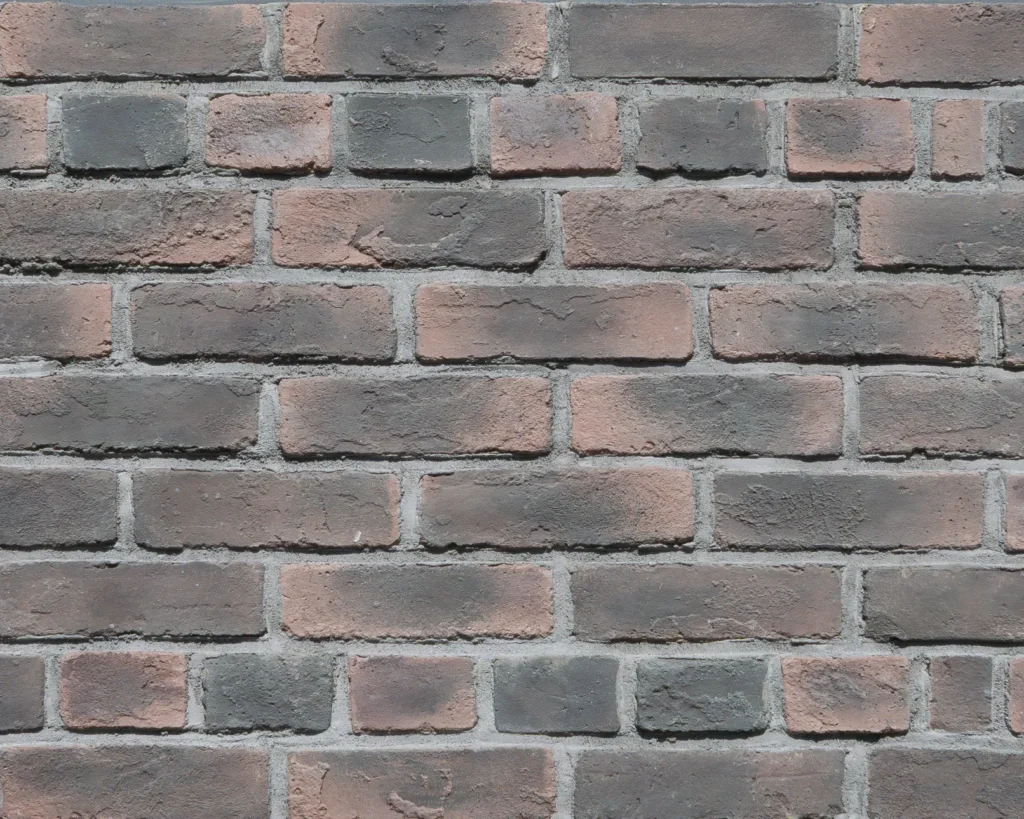
BK-1
CAN'BRICK KURO BRI BK-1 Flat
- Joint Color
- Dark Gray
- Joint Finish
- Standard Joint
- Joint Pattern
- American Bond
See all 15 jointing mortar colors here
BK-1,2,3 and BK-5 have different specifications. Click the round product images to check
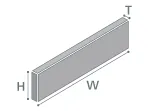 Flat
Flat
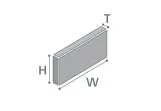 Half
Half
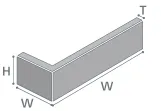 Corner
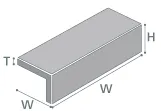 Magusa
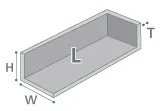 Box (L)
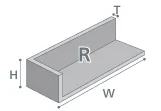 Box (R)
Our works
Case Studies
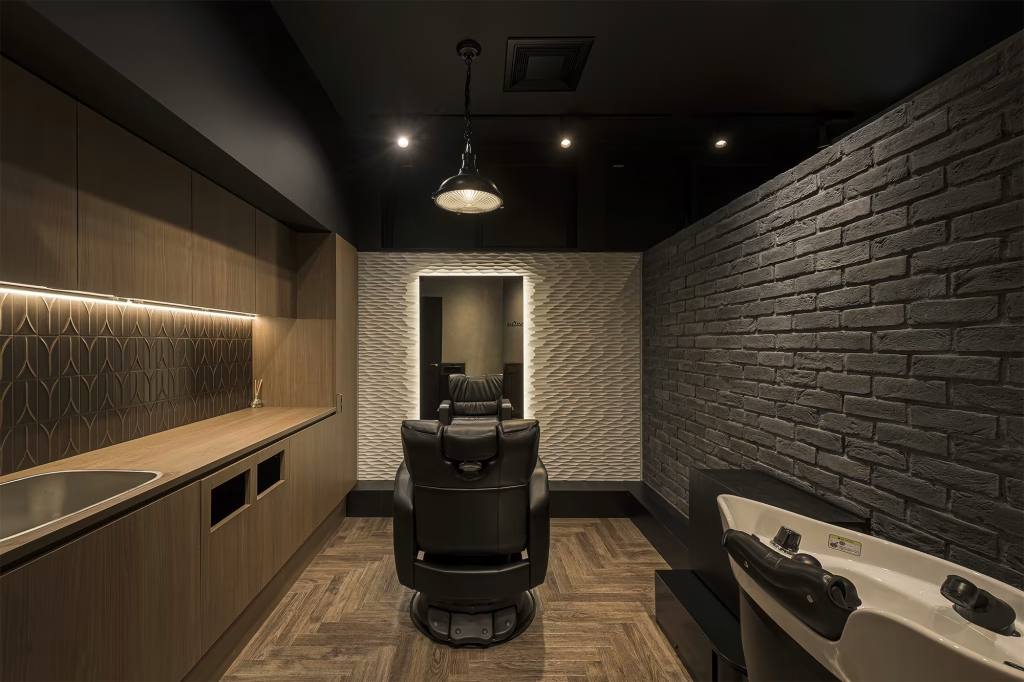
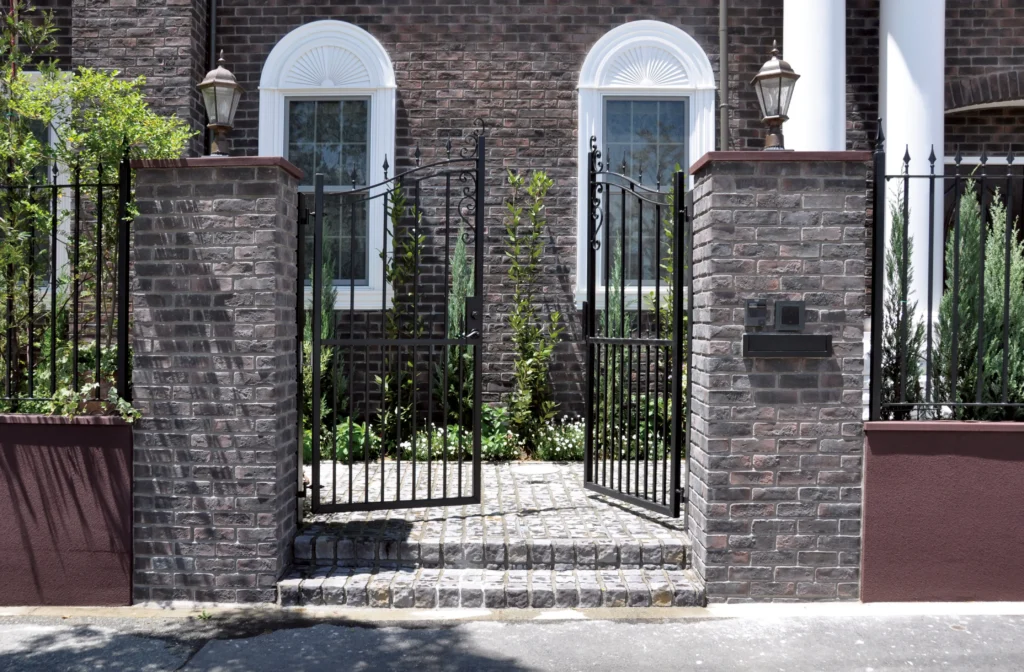
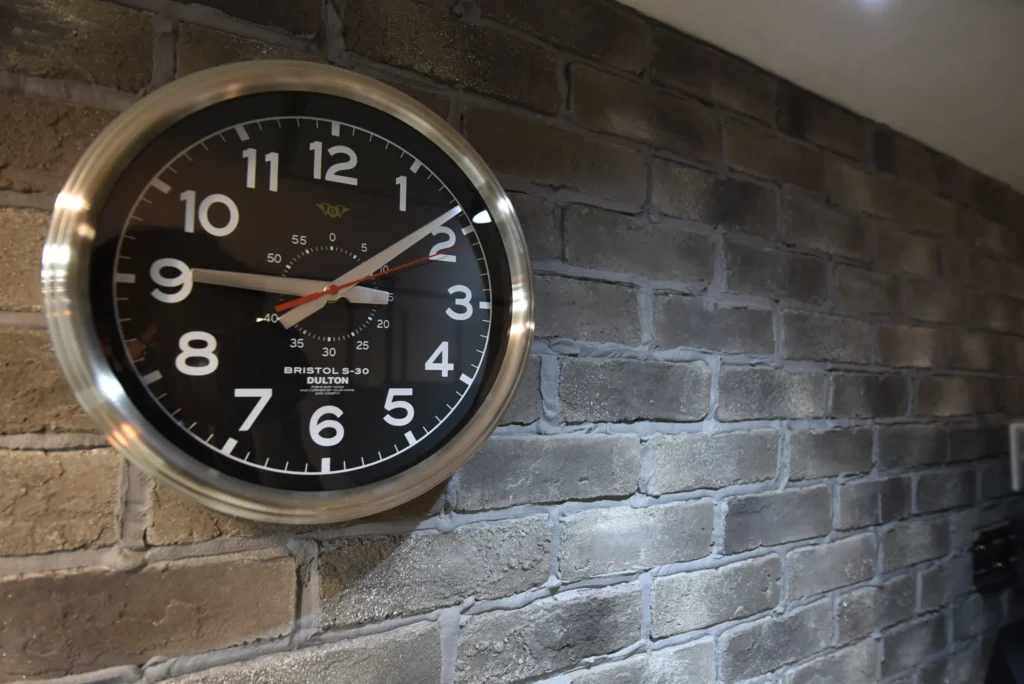
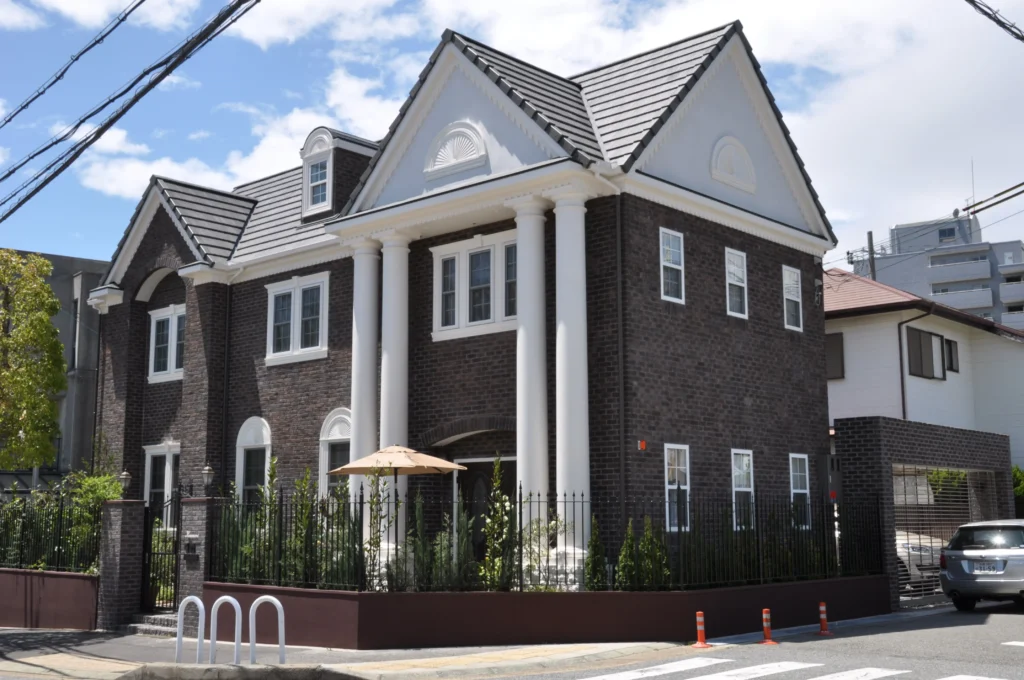
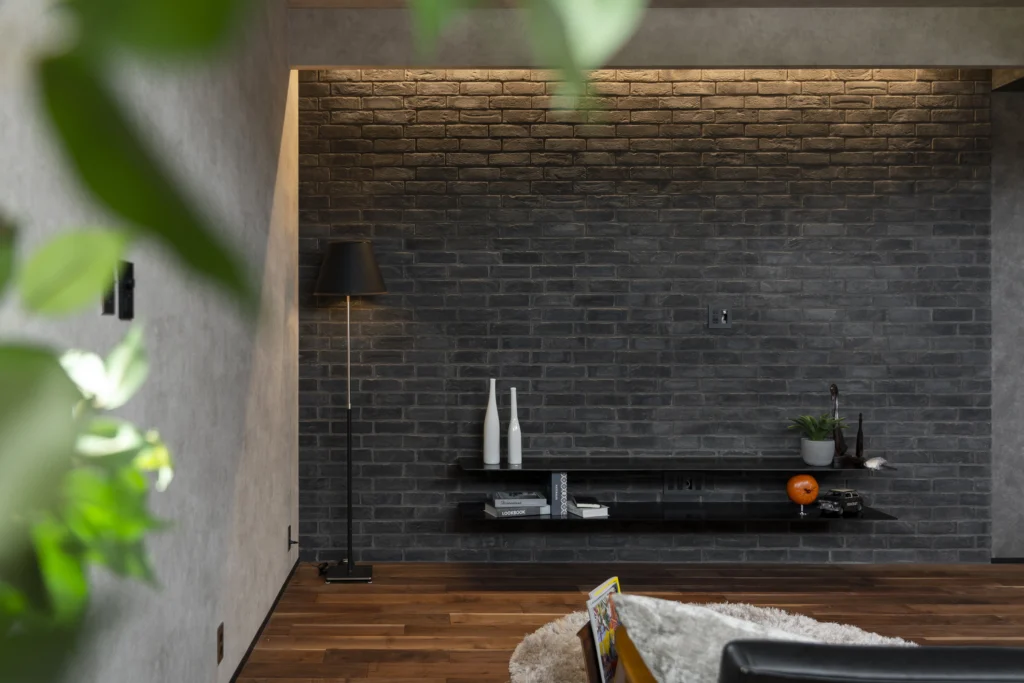
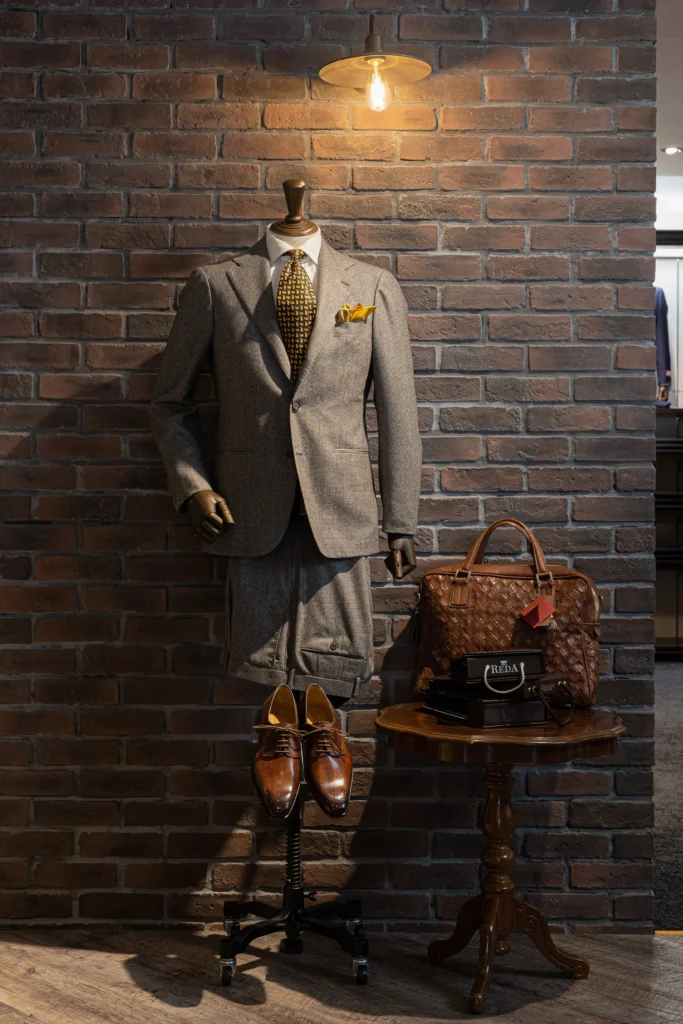
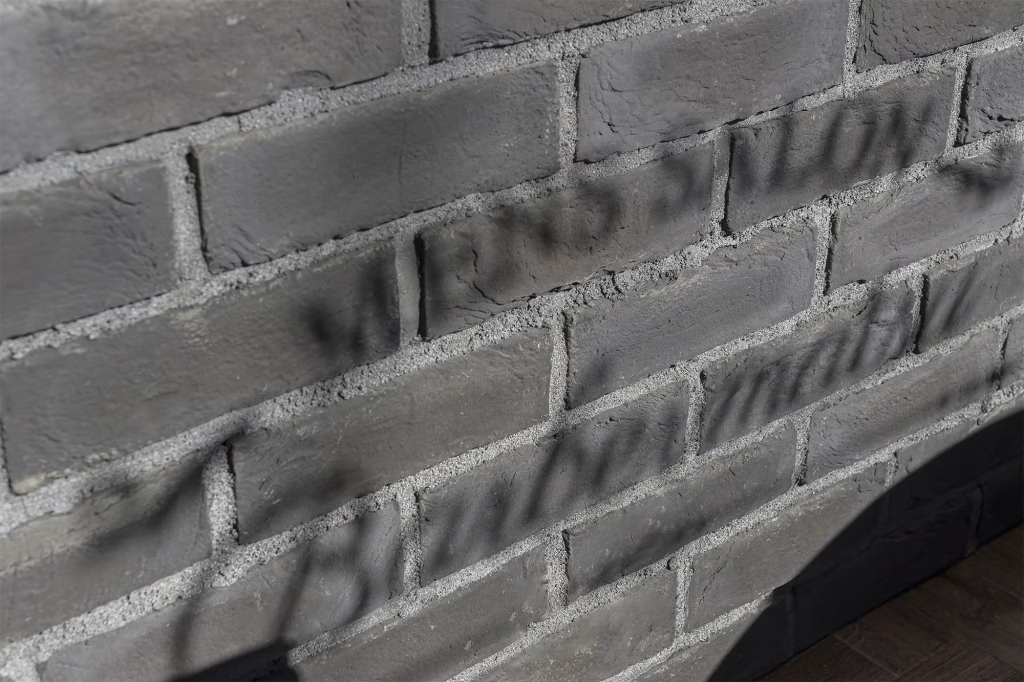
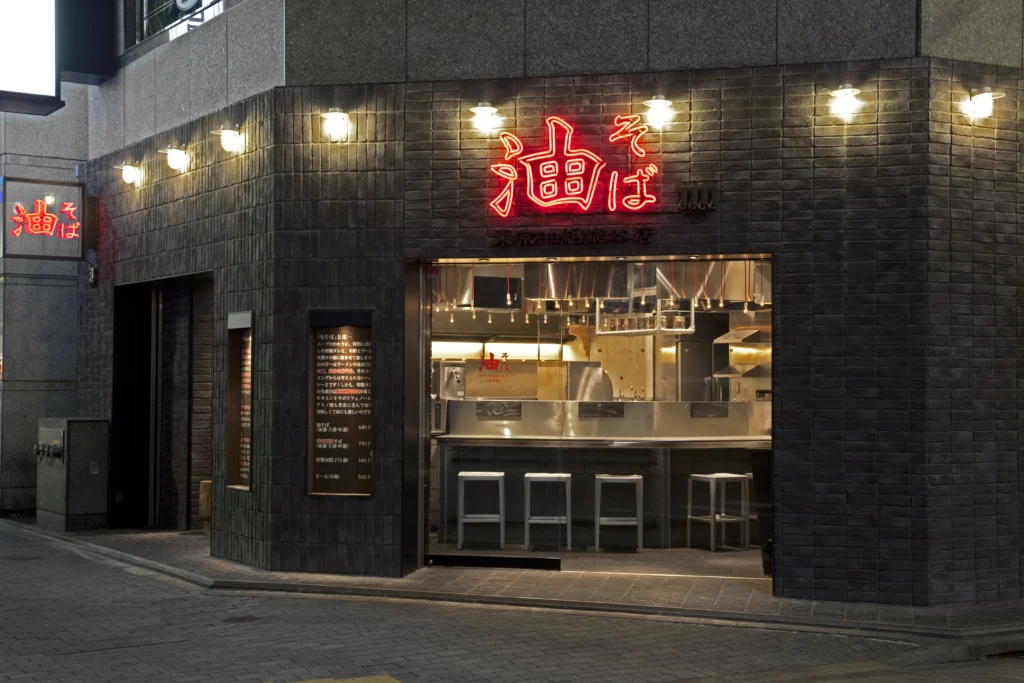
Our darkest black brick tile to date
Introducing CAN’BRICK Kurobri (BK-5)
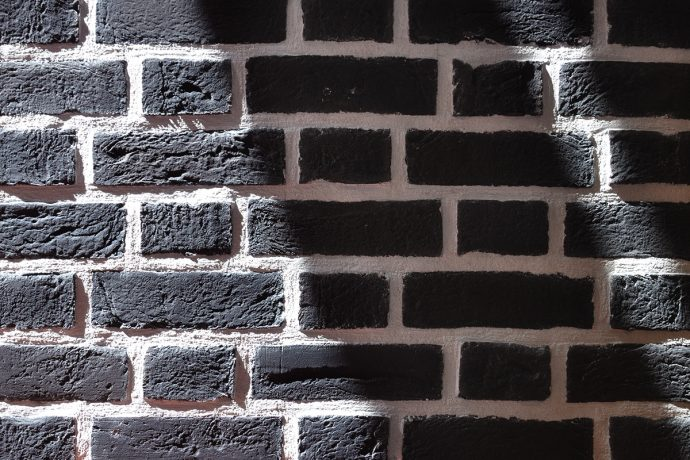
BK-5, the deepest black we have ever produced, joins CAN’BRICK Kurobri (BK), our brick tile series that recreates black brick.
Modeled on English black brick, it captures every detail of real brick formed by extruding and cutting clay.
A new production method achieves a true “black” that was difficult to reach with conventional cement products.
The color follows black brick that is dusted with black sand before firing, giving an appealing play of light and shadow. It suits refined spaces from classic to modern.
BK-3 and BK-5 compared
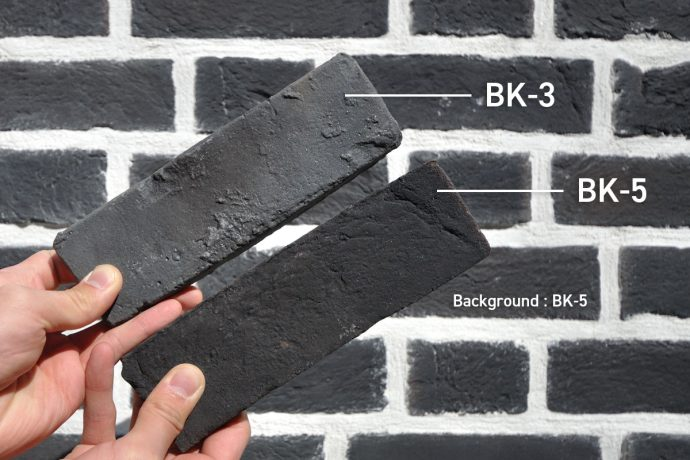
※Please note that BK-1,2,3 and BK-5 differ in specification (size, pieces per m², pieces per box).
BK-3 is the most popular in the series. Simply changing the joint color or the joint finish transforms the look. White joints, or dark gray? Full Joint, or Overgrout Joint? Take a look and see which you prefer.
Calculator
Material Estimator (Quantity, Jointing Mortar, Adhesive)
Precaution
Important Notes
・Use a joint width for CAN'BRICK Kurobri (BK) of around 12 mm.
・The uneven sizes and color variation of CAN'BRICK Kurobri (BK) allow for a more antique finish.
・When installing on exterior walls, always fill the joints to at least 2/3 of the brick thickness. Without enough joint mortar, water reaches the back of the brick and causes it to come loose.
・On exterior walls we recommend Repel S, a penetrating water repellent, to prevent staining, deterioration, and efflorescence.
・To make the most of the color and texture, mix product from several cartons.
・CAN'BRICK is a cement product. Never acid wash it.
▶︎About precast concrete products
・The quantities given per m² and per m assume the recommended joint width.
FAQ
FAQ
Q1. Can CAN’BRICK be used on exterior walls?
Yes, it can be used on exterior walls.
To keep it looking its best, we recommend using it together with our ancillary product Repel S (penetrating water repellent).
Q2. Is CAN’BRICK imported?
No. It is made in Japan.
Every piece is made by hand by craftsmen at our own factory in Japan, so we can still supply matching material if repairs are needed in the future.
Q3. I have heard that precast concrete brick tile such as CAN’BRICK is weaker than porcelain tile. Is that true?
Its strength is indeed lower than porcelain tile. In recent years, however, installing with flexible adhesive has become standard practice, which largely offsets that weakness, and cracking has decreased significantly.
If a crack does appear, our BRICK+AID repair compound makes it easy to fix.
Q4. CAN’BRICK is a cement-based product. Is the cut edge cement gray?
No. Pigment is mixed into the mortar, so the cut edge is the same color as the face.
When cutting on site, we recommend scoring a line and splitting the piece with a chisel and hammer. If the cut edge concerns you, we recommend BRICK+AID, a repair compound made for brick tile.
Q5. Is there a risk of the product being discontinued?
No. Even if we discontinue a product for our own reasons, we can produce it again at our own factory.
You can specify it with confidence, knowing material will be available if repairs are ever needed.
Q6. Is CAN'BRICK non-combustible? Please tell me the certification number.
CAN'BRICK is a non-combustible material.
The Building Standards Act recognizes two types of non-combustible material:
Specified materials: non-combustible materials designated by the Minister of Land, Infrastructure, Transport and Tourism
Certified materials: non-combustible materials granted individual certification by the Minister
The mortar and concrete that CAN'BRICK is made from are classified as specified non-combustible materials. The certification number we are often asked for is issued only to certified materials.
Both qualify as non-combustible materials under the Building Standards Act and can be used in the same way.
Q7. Can it be used around wood stoves and fireplaces?
Yes, anywhere the surface temperature stays at 200°C or below. Ordinary resin-based adhesives lose bond strength at those temperatures, so a mortar-based adhesive is required. For a comparison of heat resistance by adhesive type and the points to watch during installation, see “Can brick tile be used on wood stove and fireplace walls? Heat resistance and installation guide”.
Other items
CAN'BRICK
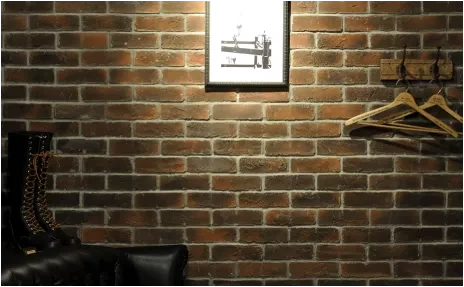
Standard (STD)
Standard
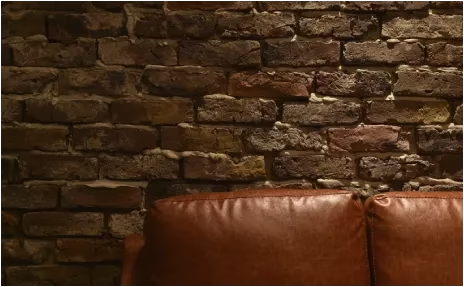
Manchester (MC)
MANCHESTER
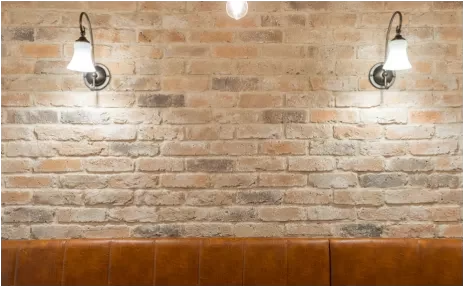
England (ENG)
England
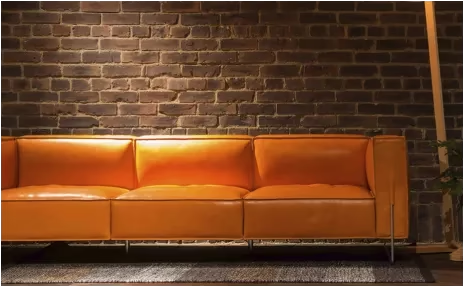
Cambridge (CB)
CAMBRIDGE
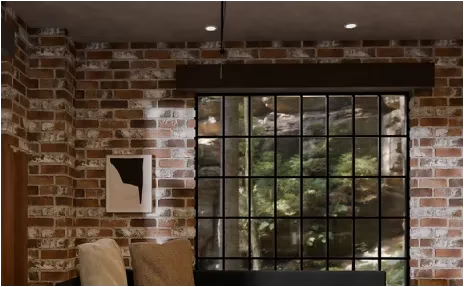
Boston (BOS)
Boston
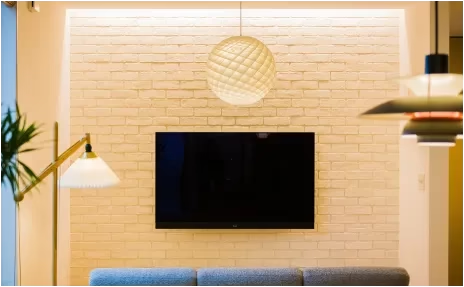
Shirobri White Brick (WH)
SHIRO BRI
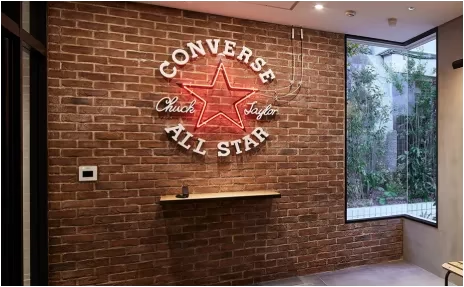
St. James (SJ)
St.James
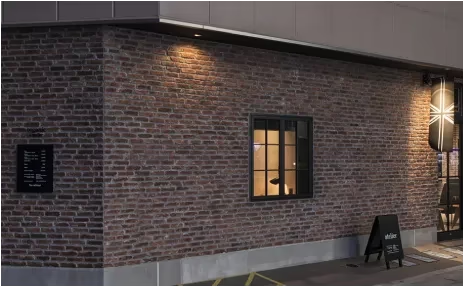
Amsterdam (AM)
Amsterdam
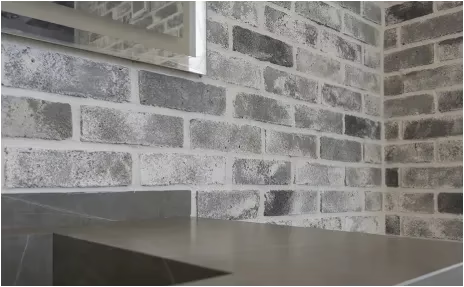
Texas Crenshaw (TX)
Texas Crenshaw
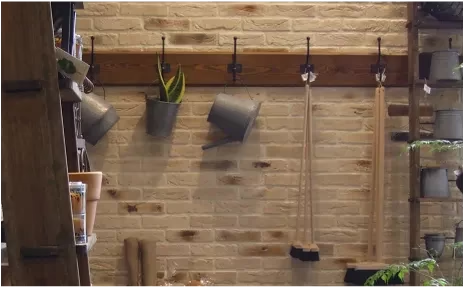
Netherland (NL)
Netherland
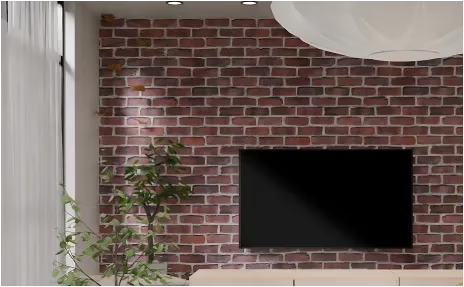
Montana (MO)
Montana
Designers Series
Designers Series

G.G. Kentlands (G.G.K)
G.G.Kentlands

G.G. Brooklyn (G.G.B)
G.G.Brooklyn
CONTACT
General Inquiries