

G.G.Kentlands
Brick, Brick Tile & Thin-Cut Brick G.G. Kentlands (G.G.K)(G.G.Kentlands)
Recommended Joint Width and Estimated Usage
- Exterior Wall ○
- Interior Wall ○
- Interior Floor ×
- Exterior Floor ×
- Slip Resistance -
- Frost Resistance △


How to Read the Icons
○ = Suitable / △ = Suitable with conditions / × = Not suitable / - = Not applicable
- Exterior Wall ○ Exterior wall areas of buildings and houses (please consult us separately regarding soffits and ceilings).
- Interior Wall ○ Interior wall areas of buildings and houses (bathroom walls, kitchen backsplashes, toilet walls, shop walls and other relatively low wall areas. Please consult us separately regarding soffits and ceilings).
- Interior Floor × Interior floor areas that do not get wet (kitchen floors, indoor toilets, indoor shop floors and other areas walked on in shoes or slippers, where the floor is not exposed to rainwater or other moisture).
- Exterior Floor × Exterior floors of buildings and houses, and floors walked on in shoes that get wet or where rainwater is carried in (including interior floors such as building lobbies and house entrances). Please consult us separately regarding public exterior areas such as parks and pavements.
- Slip Resistance - A measure of the slip resistance of floor tiles. This site lists either the C.S.R. value or the DIN 51130 rating. Note on DIN 51130: the higher the R value, the less slippery the tile. In Europe, tiles rated R10 or higher are recommended for outdoor use.
- Frost Resistance △ Indicates whether the tile can be used in cold regions and other environments where temperatures fall below freezing. When used together with Repel S (penetrating water repellent), the tile can also be used in cold regions.
CAN'BRICK
“G.G. Kentlands (GGK)” is made by slicing carefully selected bricks from the range of Glen-Gery, one of the largest premium brick manufacturers in the United States. Kentlands is one of the most exclusive residential districts in America and its value continues to rise; this is one of the bricks you will always find in neighborhoods that are loved from one generation to the next. Now you can bring the enduring elegance of a brick home to Japan.
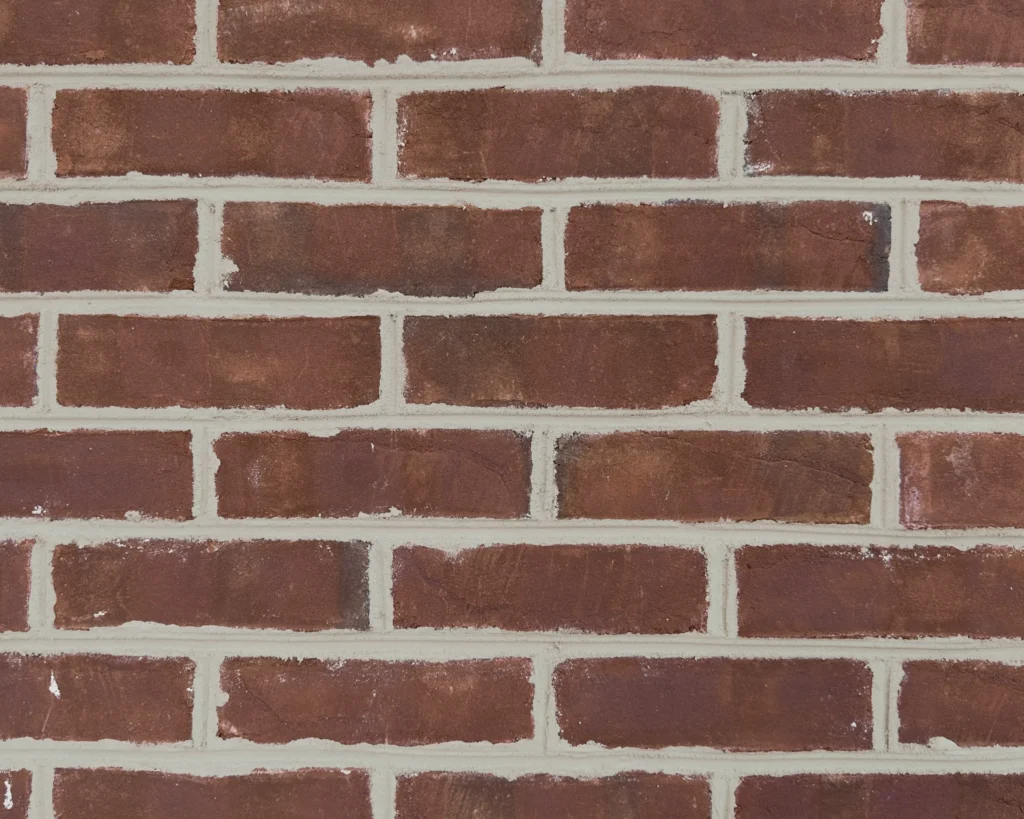
GGK-1
G.G.Kentlands GGK-2 Full Brick
- Joint Color
- Off-White
- Joint Finish
- Grapevine Joint
- Joint Pattern
- Running Bond
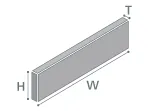 Flat
Flat
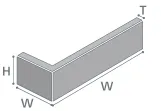 Corner
 Onama
Onama
Our works
Case Studies
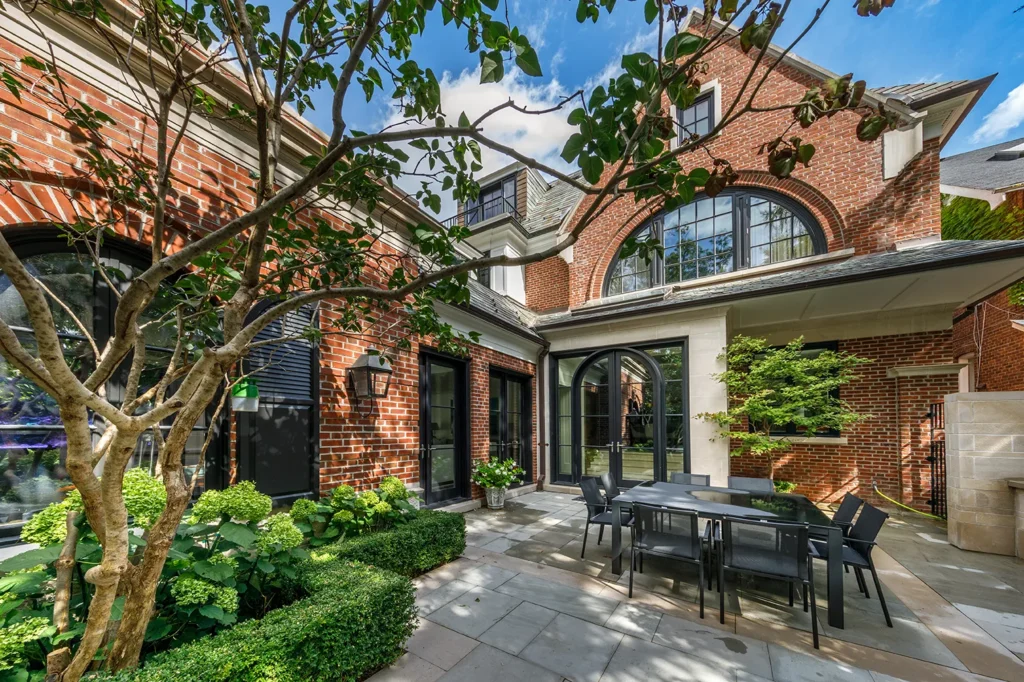
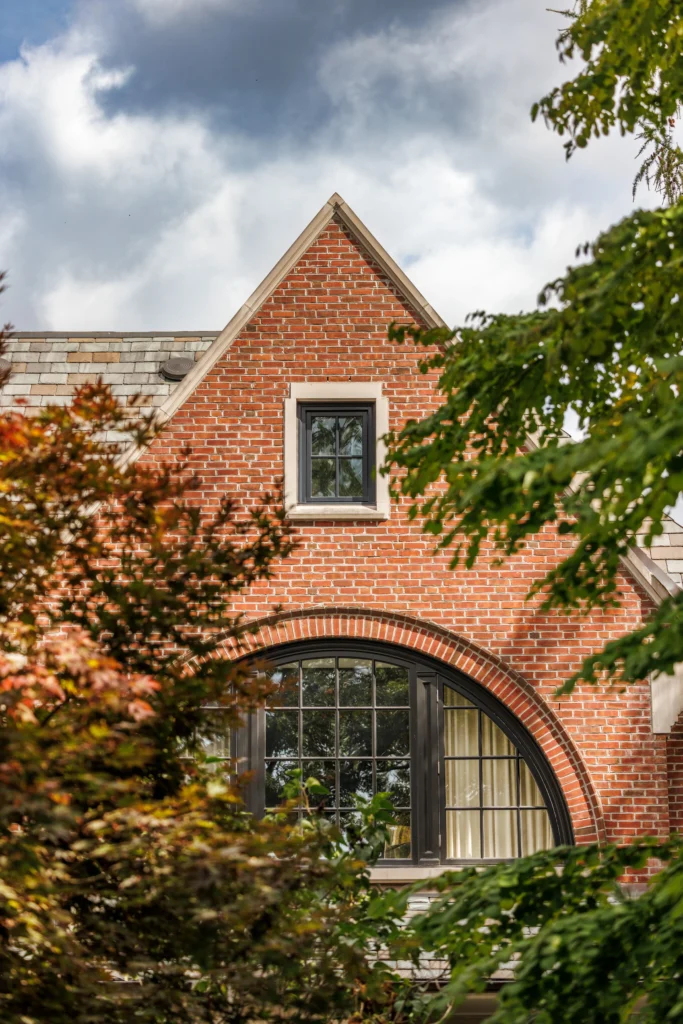

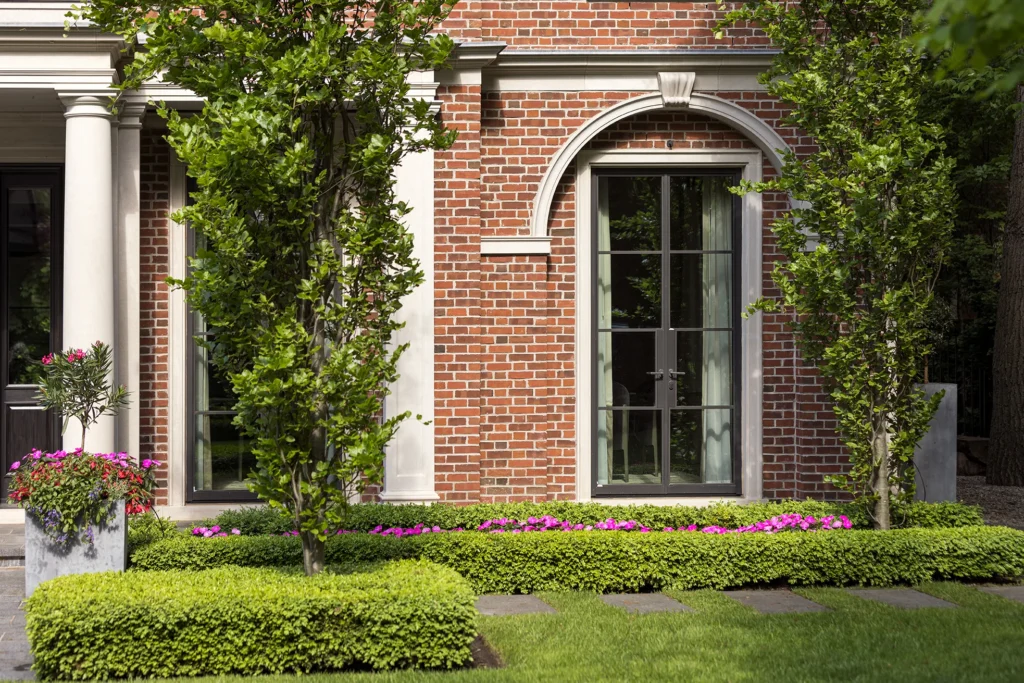
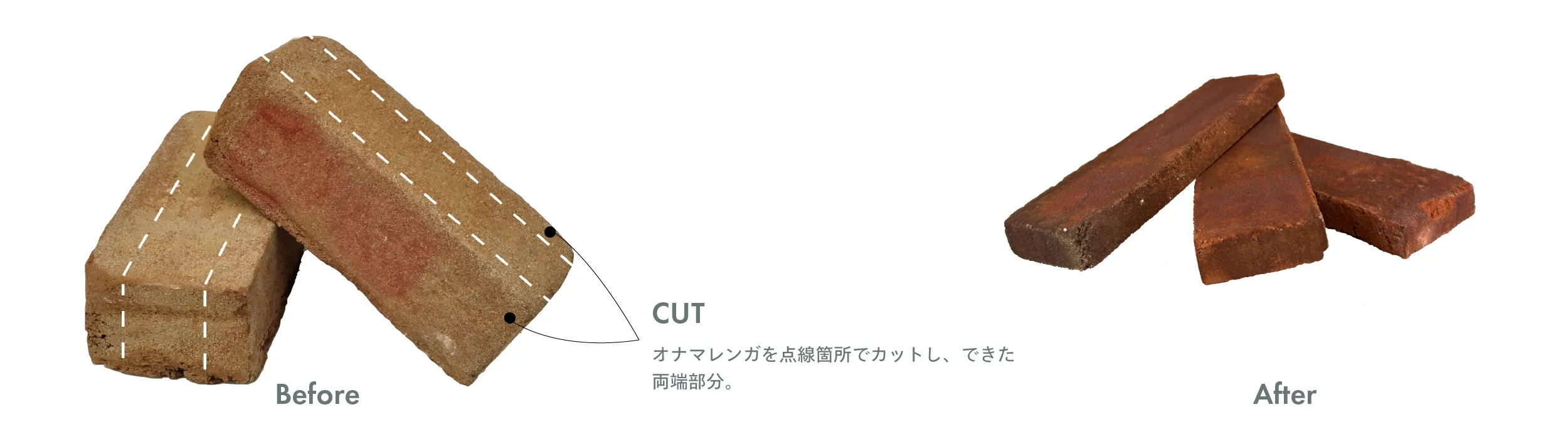
⚫︎The G.G. Kentlands series comes in two types, Slice (thin-cut brick) and Onama (full brick). Choose the one that suits your application.
Slice (Thin-Cut Brick)
 |
Onama (Full Brick)
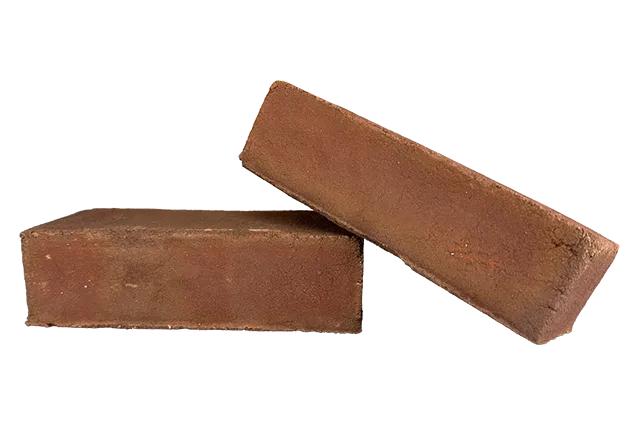 GGK1-O | 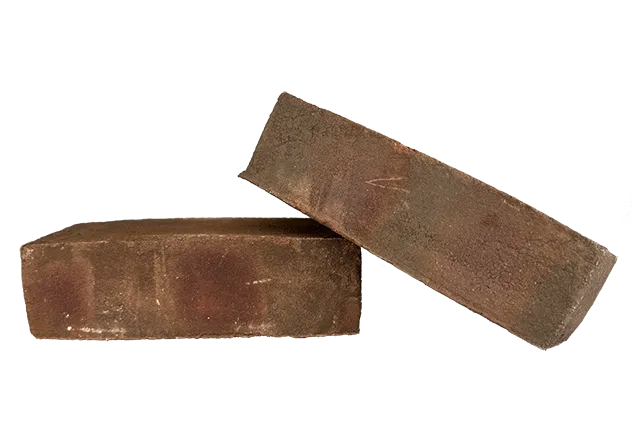 GGK2-O | GGK3-O |
Glen-Gery Corporation
About Glen-Gery
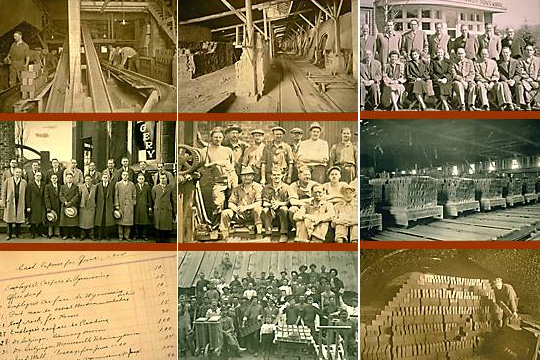
Glen-Gery is one of the largest premium brick manufacturers in the United States.
The company’s history began in 1890, at the height of the Industrial Revolution, when Albert A. Gery bought 32 acres of land in Reading, Pennsylvania, with two rectangular kilns, and founded the Montello Clay and Brick Company — the forerunner of Glen-Gery. The brick kiln he built, using a new continuous firing process to meet large orders, was the biggest in the United States at the time. Surging demand for brick after the war brought the company unprecedented growth in both geographic reach and production volume.

Today Glen-Gery brick can be found in many famous and architecturally distinguished buildings, among them Worldwide Plaza and the Chrysler Building in New York City, as well as in the handsome detailing of Washington Harbour in the nation’s capital.
A century on from its modest beginnings, Glen-Gery still holds to the standards set at its founding: quality, integrity, innovation and completeness. Today it is one of the largest brick manufacturers in the United States, leading the industry with a diverse line of more than 600 brick products.
Calculator
Material Estimator (Quantity, Jointing Mortar, Adhesive)
Precaution
Important Notes
・This is an imported product. Please check availability with us before placing an order.
・Use a joint width of approximately 10mm. ・The quantities required per m² and per m include the joints.
・Because these are handmade imported bricks, some pieces vary in size and weight beyond the stated figures.
・Every brick has its own character, so please allow for differences in color, pattern and size when considering this product.
・Some pieces may arrive broken. Please set the broken faces back together during installation.
FAQ
FAQ
Q1. Can CAN’BRICK be used on exterior walls?
Yes, it can be used on exterior walls.
To keep it looking its best, we recommend using it together with our ancillary material “Repel S” (penetrating water repellent).
Q2. Is CAN’BRICK an imported product?
No. It is made in Japan.
Every piece is made by hand by our craftsmen at our own factory in Japan, so we can supply matching material if repairs are needed in the future.
Q3. I have heard that brick tile made as a precast concrete product, such as CAN’BRICK, is weaker than porcelain tile. Is that true?
It is true that the strength is lower than porcelain tile. In recent years, however, installation with flexible adhesive has become standard practice, which compensates for this in most cases, and cracking has decreased significantly.
Even in the unlikely event that a crack appears, our “BRICK+AID” repair compound makes it easy to fix, so you can specify it with confidence.
Q4. CAN’BRICK is a cement-based product — is the cut edge cement gray?
No. Pigment is mixed into the mortar, so the cut face is the same color as the surface.
When a piece has to be cut on site, we recommend scoring a line and splitting it with a chisel and hammer. If the cut face still bothers you, we recommend “BRICK+AID,” a repair compound made specifically for brick tile.
Q5. Is there a risk that the product will be discontinued?
No. Even if an item is discontinued for our own reasons, we can put it back into production at our own factory.
You can specify it with confidence, knowing material will still be available if repairs become necessary.
Q6. Is CAN'BRICK non-combustible? Please tell us the certification number.
CAN'BRICK is a non-combustible material.
The Building Standards Act recognizes two kinds of non-combustible materials:
“Specified” materials: non-combustible materials specified by the Minister of Land, Infrastructure, Transport and Tourism
“Certified” materials: non-combustible materials that have received individual certification from the Minister
The mortar and concrete CAN'BRICK is made from are classified as “specified” non-combustible materials. The certification number we are often asked about is issued only for “certified” materials.
Both count as non-combustible materials under the Building Standards Act and can be used in the same way.
Other items
CAN'BRICK
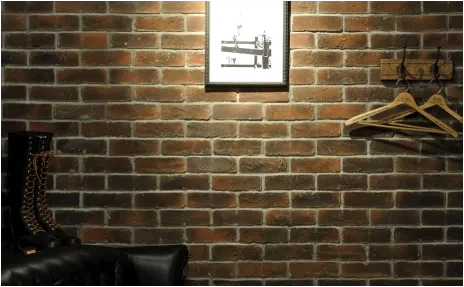
Standard (STD)
Standard
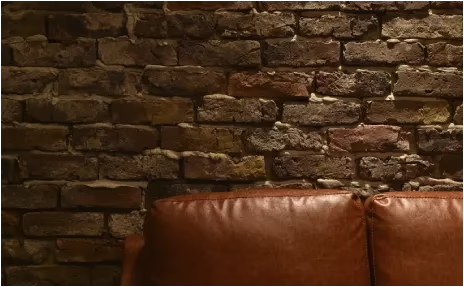
Manchester (MC)
MANCHESTER
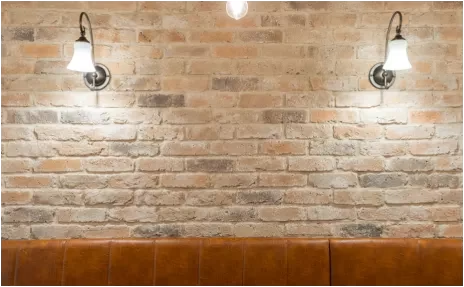
England (ENG)
England
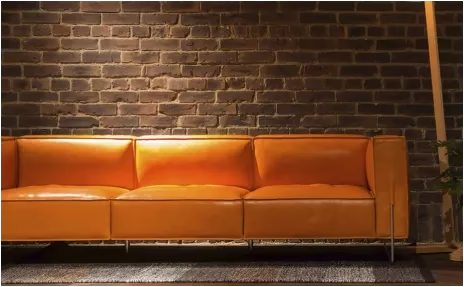
Cambridge (CB)
CAMBRIDGE
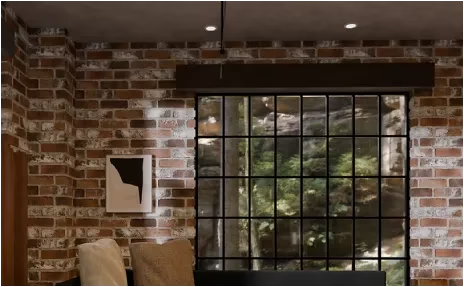
Boston (BOS)
Boston
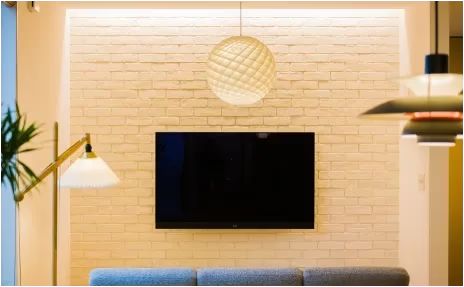
Shirobri White Brick (WH)
SHIRO BRI
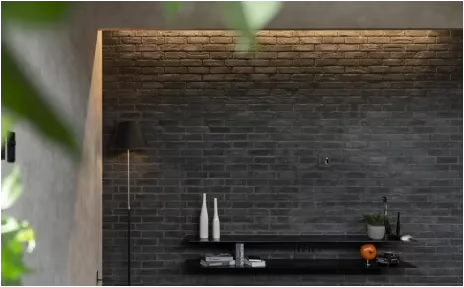
Kurobri Black Brick (BK)
KURO BRI
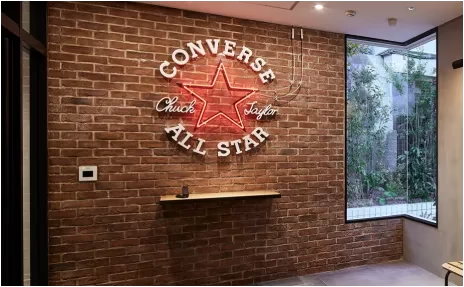
St. James (SJ)
St.James
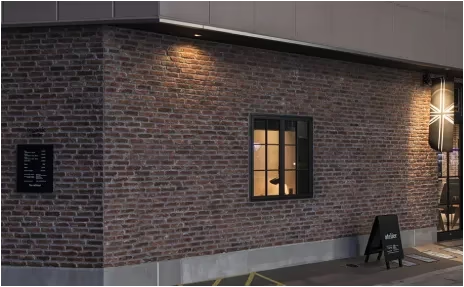
Amsterdam (AM)
Amsterdam
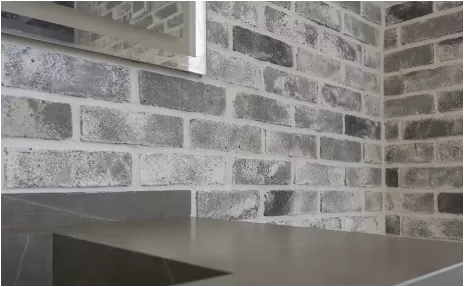
Texas Crenshaw (TX)
Texas Crenshaw
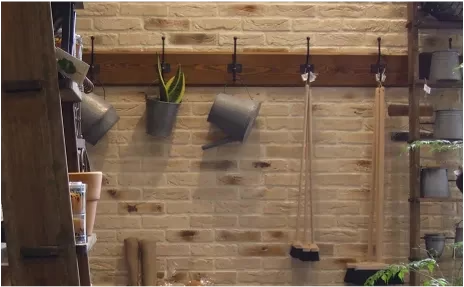
Netherland (NL)
Netherland
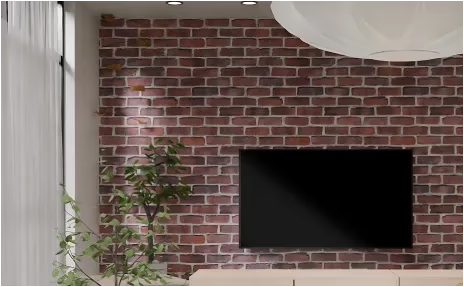
Montana (MO)
Montana
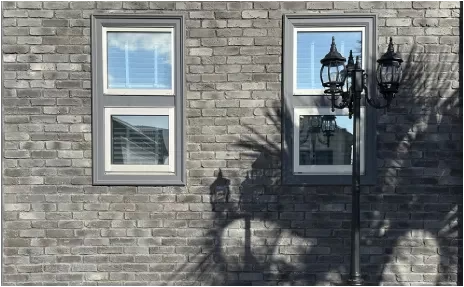
Designers Series
Designers Series

G.G. Brooklyn (G.G.B)
G.G.Brooklyn
CONTACT
General Inquiries