

CRANQ
Manufactured Stone Veneer & Wall Cladding Crank (CRQ)(CRANQ)
Recommended Joint Width and Estimated Usage
- Exterior Wall ○
- Interior Wall ○
- Interior Floor ×
- Exterior Floor ×
- Slip Resistance -
- Frost Resistance -


How to Read the Icons
○ = Suitable / △ = Suitable with conditions / × = Not suitable / - = Not applicable
- Exterior Wall ○ Exterior wall areas of buildings and houses (please consult us separately regarding soffits and ceilings).
- Interior Wall ○ Interior wall areas of buildings and houses (bathroom walls, kitchen backsplashes, toilet walls, shop walls and other relatively low wall areas. Please consult us separately regarding soffits and ceilings).
- Interior Floor × Interior floor areas that do not get wet (kitchen floors, indoor toilets, indoor shop floors and other areas walked on in shoes or slippers, where the floor is not exposed to rainwater or other moisture).
- Exterior Floor × Exterior floors of buildings and houses, and floors walked on in shoes that get wet or where rainwater is carried in (including interior floors such as building lobbies and house entrances). Please consult us separately regarding public exterior areas such as parks and pavements.
- Slip Resistance - A measure of the slip resistance of floor tiles. This site lists either the C.S.R. value or the DIN 51130 rating. Note on DIN 51130: the higher the R value, the less slippery the tile. In Europe, tiles rated R10 or higher are recommended for outdoor use.
- Frost Resistance - Indicates whether the tile can be used in cold regions and other environments where temperatures fall below freezing. If you wish to use this product in a cold region, we can manufacture it with properties suited to cold climates. Note that it will be heavier than the standard product. It is made to order, so please contact us for details.
CAN'STONE
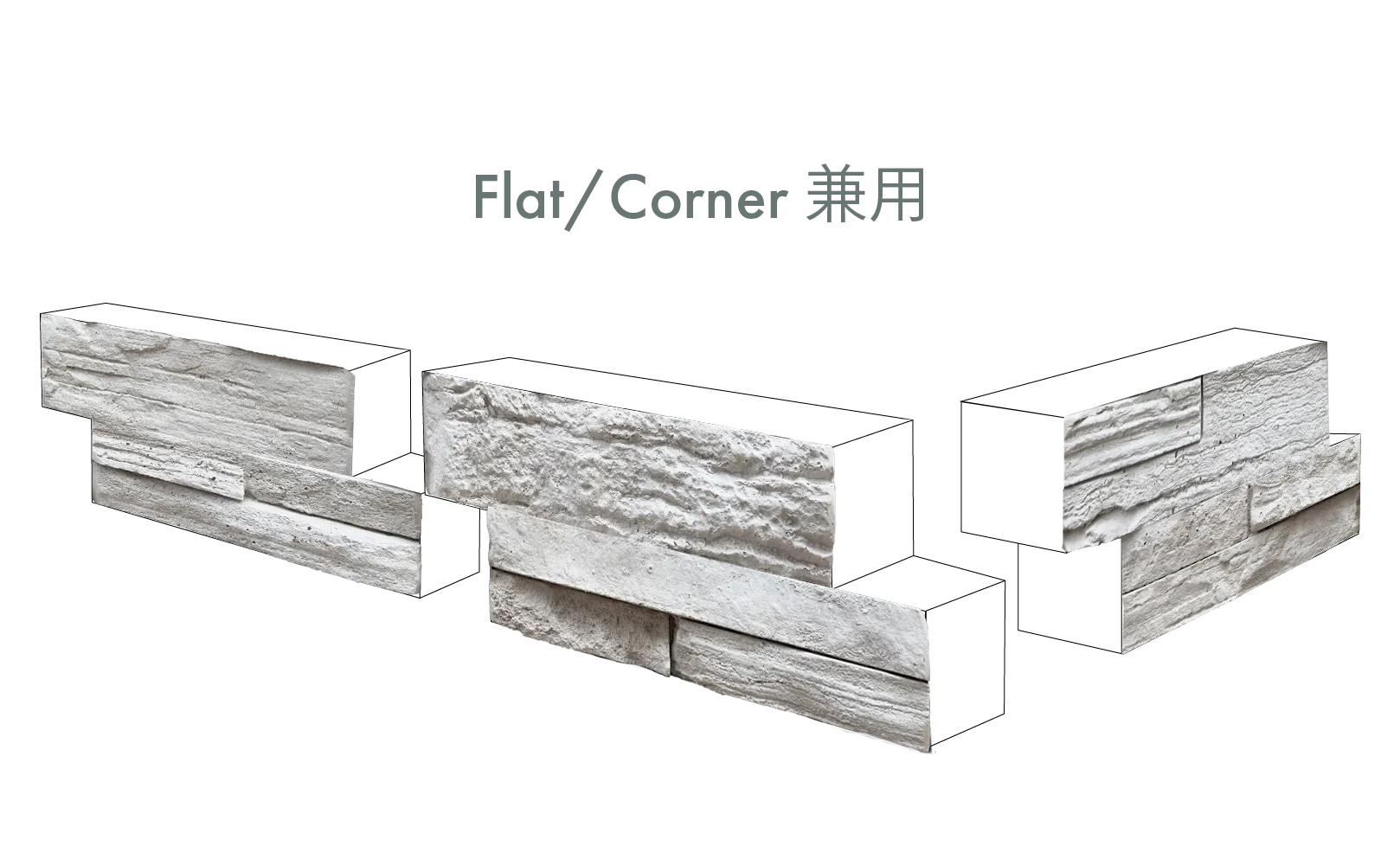
CAN’STONE “CRANQ – Crank (CRQ)” is a manufactured stone veneer whose greatest strength is that the same unit also works as a corner piece. As the name suggests, each stone is preset in a crank profile, so simply stacking the units builds a handsome stacked stone wall.
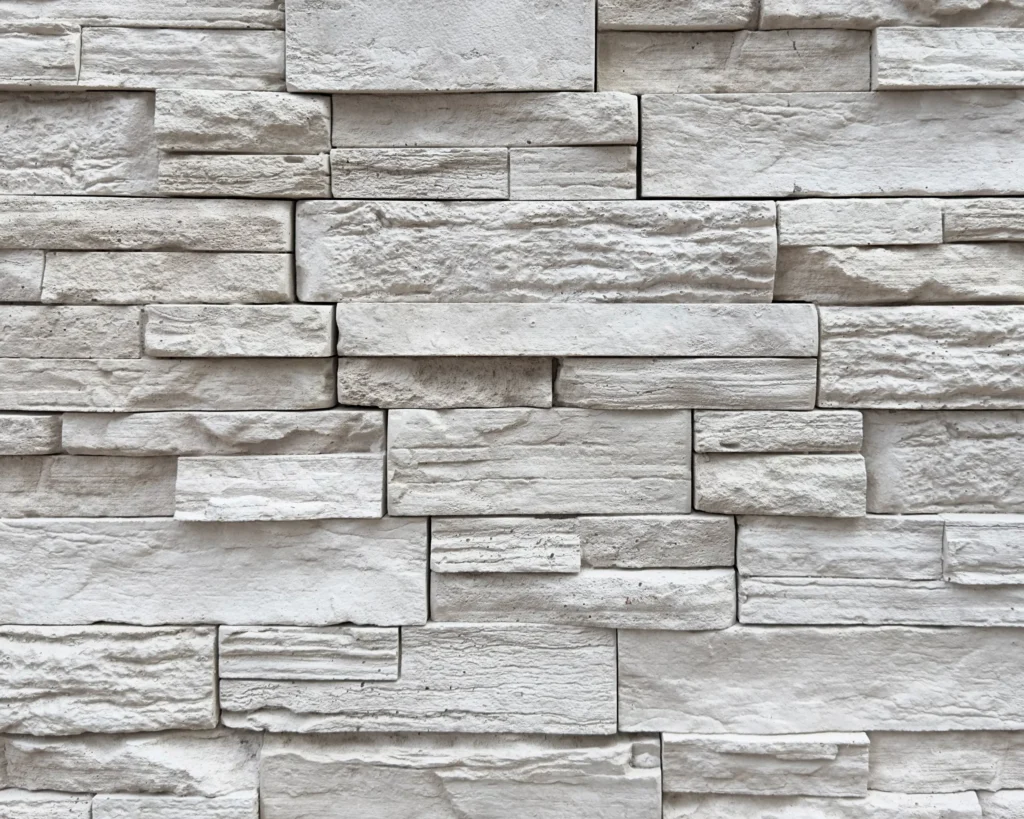
CRQ-1
CAN'STONE CRANQ CRQ-1 (0.5m2 per box) (SC Dark)
- Joint Color
- Joint Finish
- Joint Pattern
- Tight Joint
 Flat & Corner
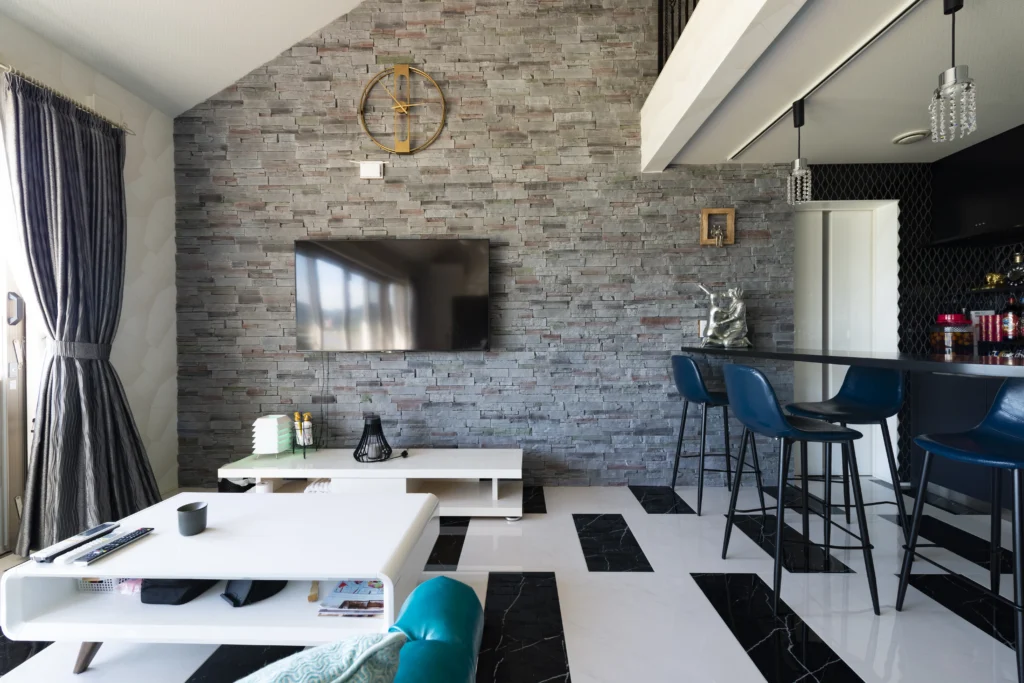
Our works
Case Studies
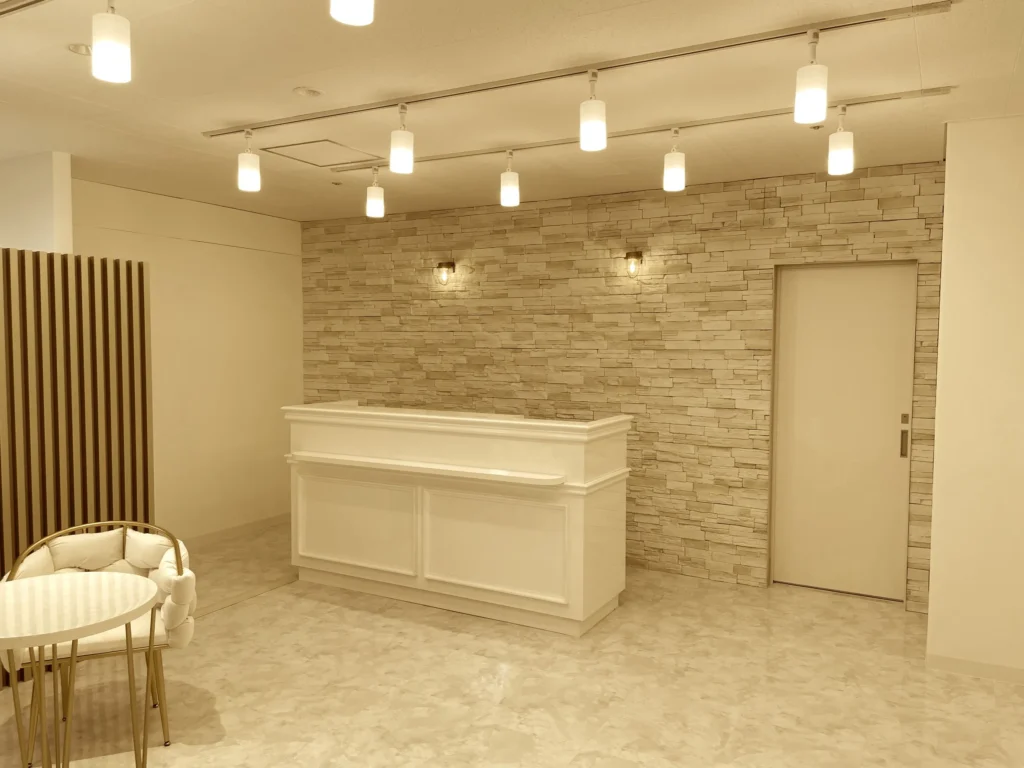
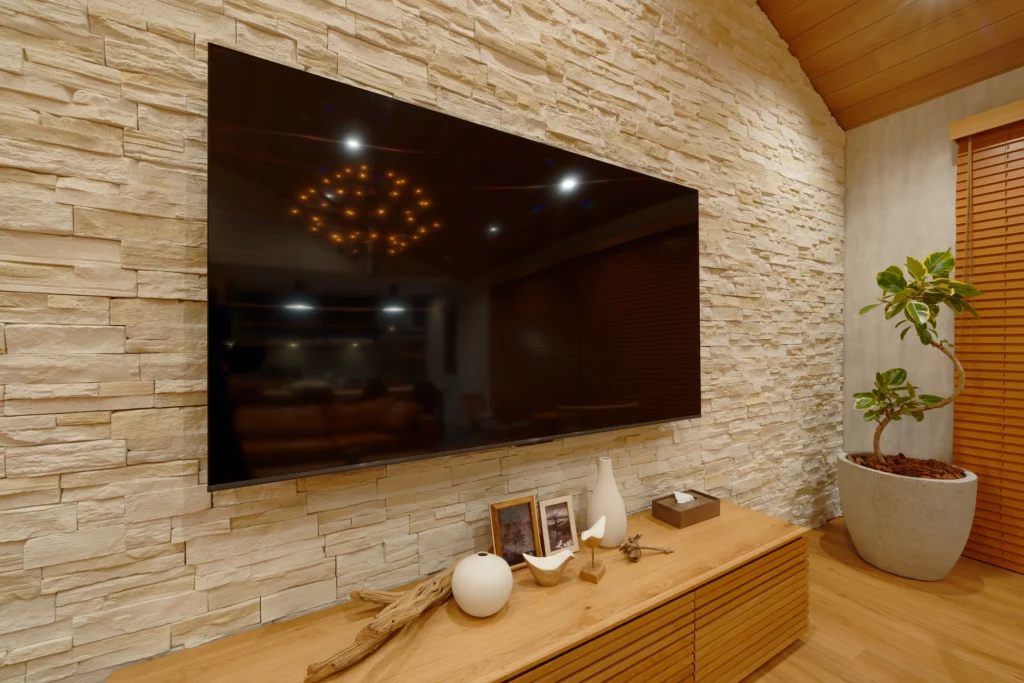
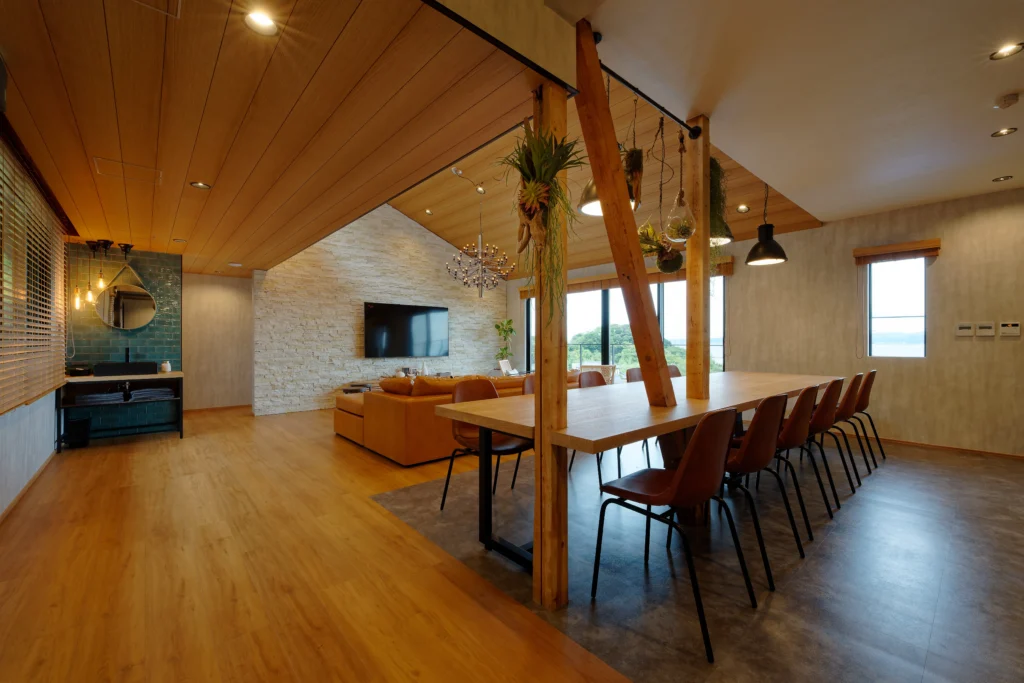
Doubles as a corner unit
 |
stone veneer that recreates the character of natural stone with more presence than the real thing
CAN’STONE
CAN’STONE is a stacked stone look stone veneer wall cladding (a precast concrete product) for interior and exterior use. It reproduces the character of natural stone with even greater presence, at roughly half the weight of real stone. Because it is made at our own factory in Japan, supply is stable and original colors can be developed, so you can match the material to your design intent.
Precaution
Important Notes
• CAN’STONE is an interior and exterior wall cladding modeled on natural stone.
• CAN’STONE “Crank (CRQ)” serves as both a flat and a corner unit.
• On exterior walls we recommend Repel S penetrating water repellent to help prevent soiling, deterioration and efflorescence.
• Color varies from piece to piece, which is part of the appeal of natural stone. Mix units from several cartons as you install.
• CAN’STONE is a cement product. Never acid-wash it.
▶︎About precast concrete products
• CAN’STONE can be produced in custom colors, with no minimum quantity. Please contact us to discuss it.
• Because the units are random in shape, cutting losses vary with the layout. Please allow for this.
FAQ
FAQ
Q1. Can CAN’STONE be used on exterior walls?
Yes, it can be used on exterior walls.
To keep it looking its best, we recommend using our ancillary product Repel S (penetrating water repellent) with it.
Q2. Is CAN’STONE imported?
No. It is made in Japan.
Every piece is made by hand by craftsmen at our own factory in Japan, so we can supply matching material if repairs are needed in the future.
Q3. I have heard that precast concrete stone tile is weaker than porcelain tile. Is that the case?
It is true that it is not as strong as porcelain tile. In recent years, however, installing with flexible adhesive has become standard practice, which compensates for that weakness, and cracking has fallen sharply.
And if a crack does appear, our STONE+AID repair compound makes the fix straightforward.
Q4. Since CAN’STONE is a cement product, is the cut edge cement gray?
No. Pigment is mixed through the mortar, so the cut edge is the same color as the face.
To cut on site, we recommend scoring a line and splitting the piece with a chisel and hammer.
Q5. Is there a risk of the product being discontinued?
No. Even if we discontinue a line for our own reasons, we can produce it again at our own factory.
You can specify it with confidence, knowing that repair material can be matched later.
Q6. Is CAN'STONE non-combustible? Could you tell us the certification number?
CAN'STONE is a non-combustible material.
Under the Building Standards Act there are two categories of non-combustible material:
“Designated”: materials designated as non-combustible by the Minister of Land, Infrastructure, Transport and Tourism
“Certified”: materials granted individual certification by the Minister
The mortar and concrete that CAN'STONE is made from fall into the “designated” category of non-combustible materials. The certification number we are often asked for is issued only to materials in the “certified” category.
Both count as non-combustible materials under the Building Standards Act and may be used in the same way.
Q7. Can it be used in cold regions?
Yes. For cold regions it is produced to a frost-resistant specification, which makes it made to order. Please also avoid installing in seasons when the temperature falls to 5℃ or below, and schedule the work for a warmer time of year.
Q8. Can it be used around wood stoves and fireplaces?
Yes, wherever the surface temperature stays at or below 200℃. Standard resin adhesives lose bond strength at those temperatures, so a mortar-based adhesive is required. For a comparison of the heat resistance of different adhesives and the points to watch during installation, see “Can brick tile be used on wood stove and fireplace walls? Heat resistance and installation guide”.
Other items
CAN'STONE
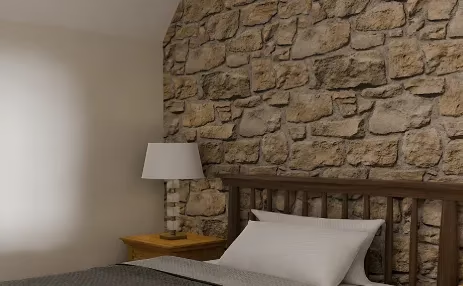
Cotswolds (COT)
COTSWOLDS
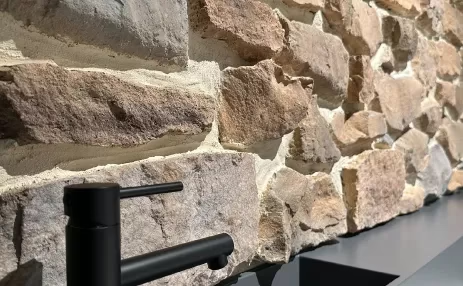
Rustic Shadow (RUS)
RUSTIC SHADOW
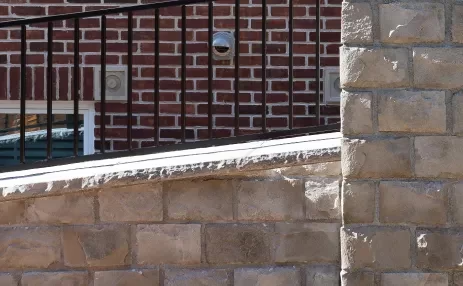
Modular Stone (MOD)
Modular Stone
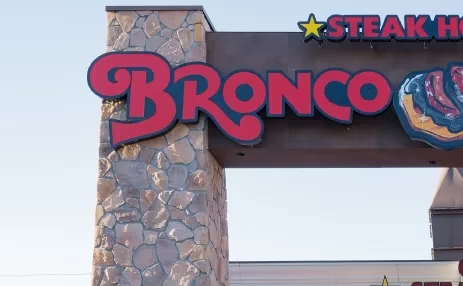
Round Canyon (ROC)
Round Canyon
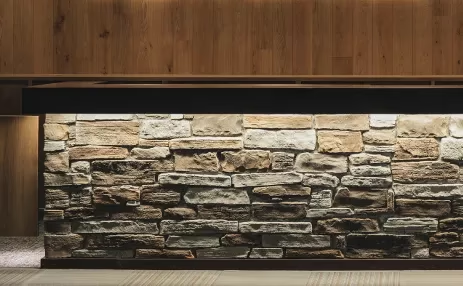
Ledge (LEG)
LEDGE
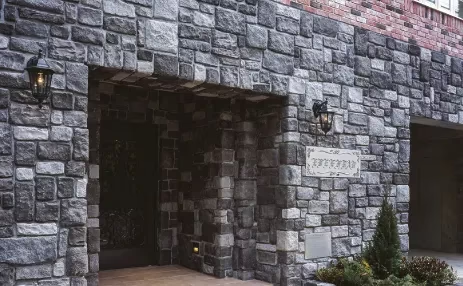
Cobble (COB)
COBBLE
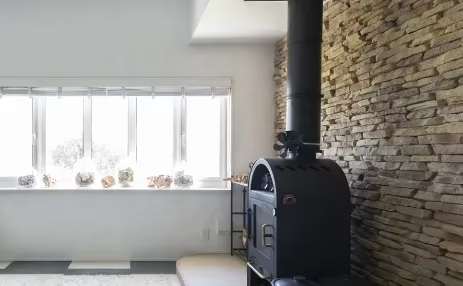
Hillside Ledge (HSL)
HILLSIDE LEDGE
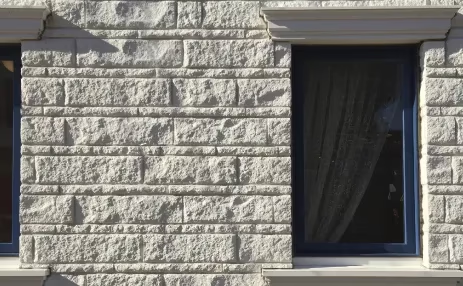
Chateau (CHA)
CHATEAU
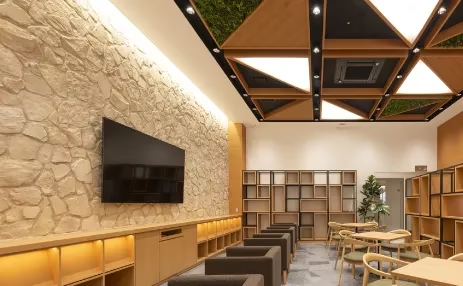
Crema (CRE)
Crema
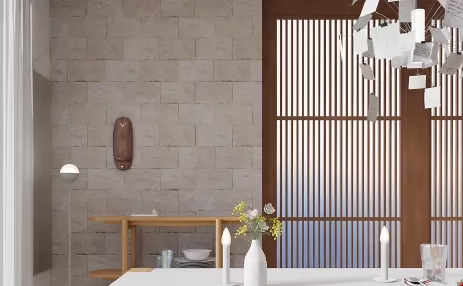
Cliff (CLF)
CLIFF
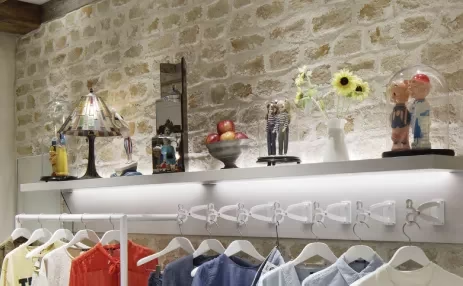
Romano (ROM)
Romano
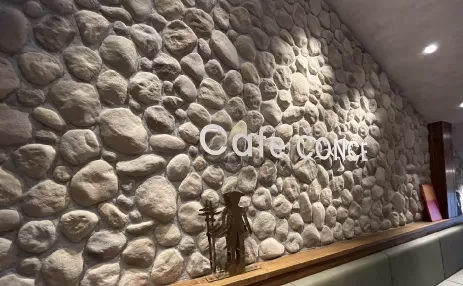
River Rock (RIV)
River Rock
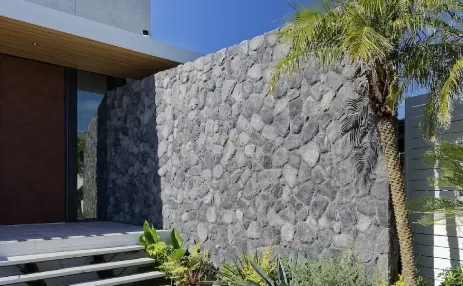
Split (SPT)
Split
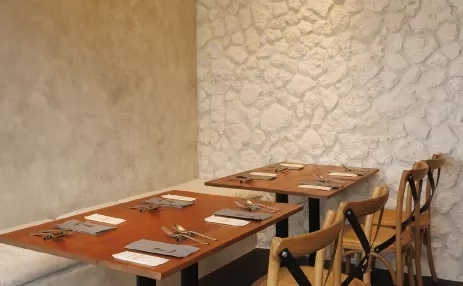
Coral (COR)
Coral
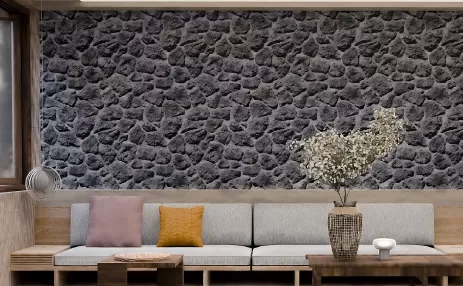
Lava Stone (LAV)
Lava Stone
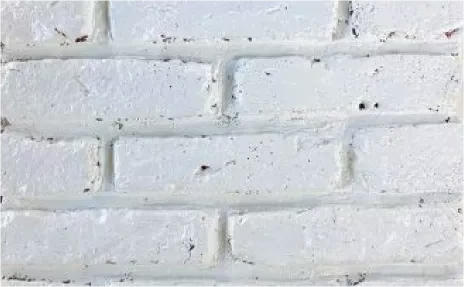
Outlet (OUT)
Outlet
CONTACT
General Inquiries