

CUBIC
Paver-Look Tile Cubic(CUBIC)
Recommended Joint Width and Estimated Usage
- Exterior Wall ×
- Interior Wall ×
- Interior Floor ○
- Exterior Floor △
- Slip Resistance -
- Frost Resistance ○


How to Read the Icons
○ = Suitable / △ = Suitable with conditions / × = Not suitable / - = Not applicable
- Exterior Wall × Exterior wall areas of buildings and houses (please consult us separately regarding soffits and ceilings).
- Interior Wall × Interior wall areas of buildings and houses (bathroom walls, kitchen backsplashes, toilet walls, shop walls and other relatively low wall areas. Please consult us separately regarding soffits and ceilings).
- Interior Floor ○ Interior floor areas that do not get wet (kitchen floors, indoor toilets, indoor shop floors and other areas walked on in shoes or slippers, where the floor is not exposed to rainwater or other moisture).
- Exterior Floor △ Exterior floors of buildings and houses, and floors walked on in shoes that get wet or where rainwater is carried in (including interior floors such as building lobbies and house entrances). Please consult us separately regarding public exterior areas such as parks and pavements.
- Slip Resistance - A measure of the slip resistance of floor tiles. This site lists either the C.S.R. value or the DIN 51130 rating. Note on DIN 51130: the higher the R value, the less slippery the tile. In Europe, tiles rated R10 or higher are recommended for outdoor use.
- Frost Resistance ○ Indicates whether the tile can be used in cold regions and other environments where temperatures fall below freezing.
Precast Concrete Product
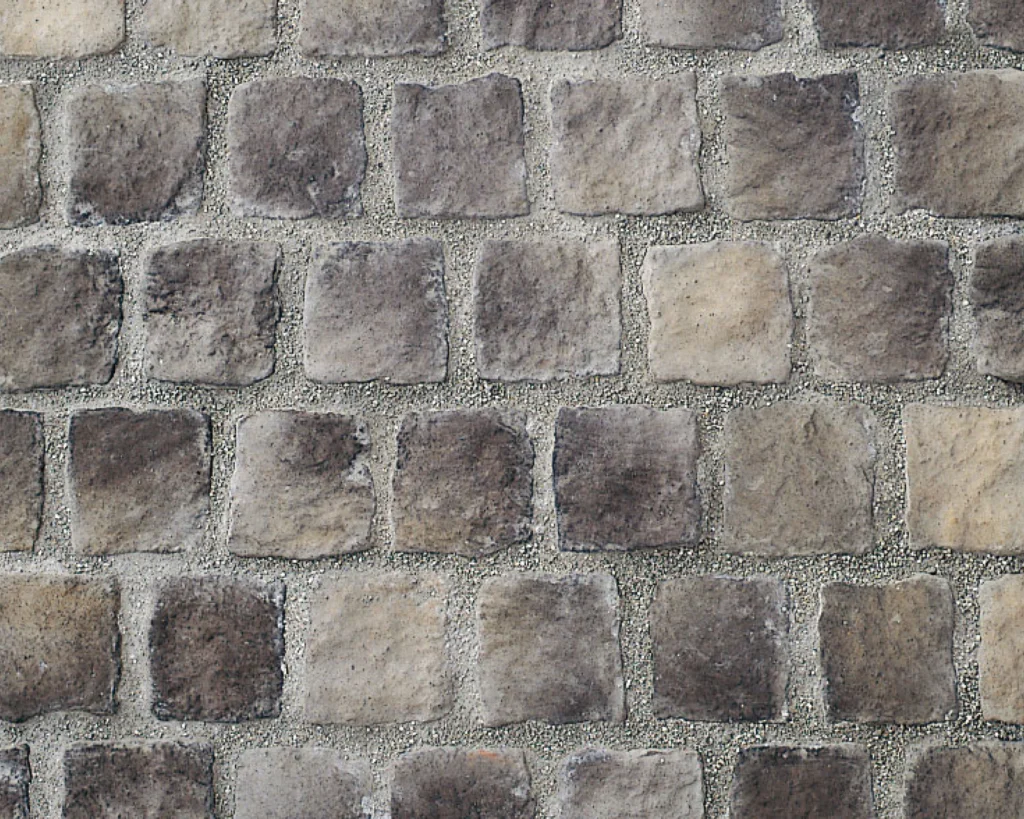
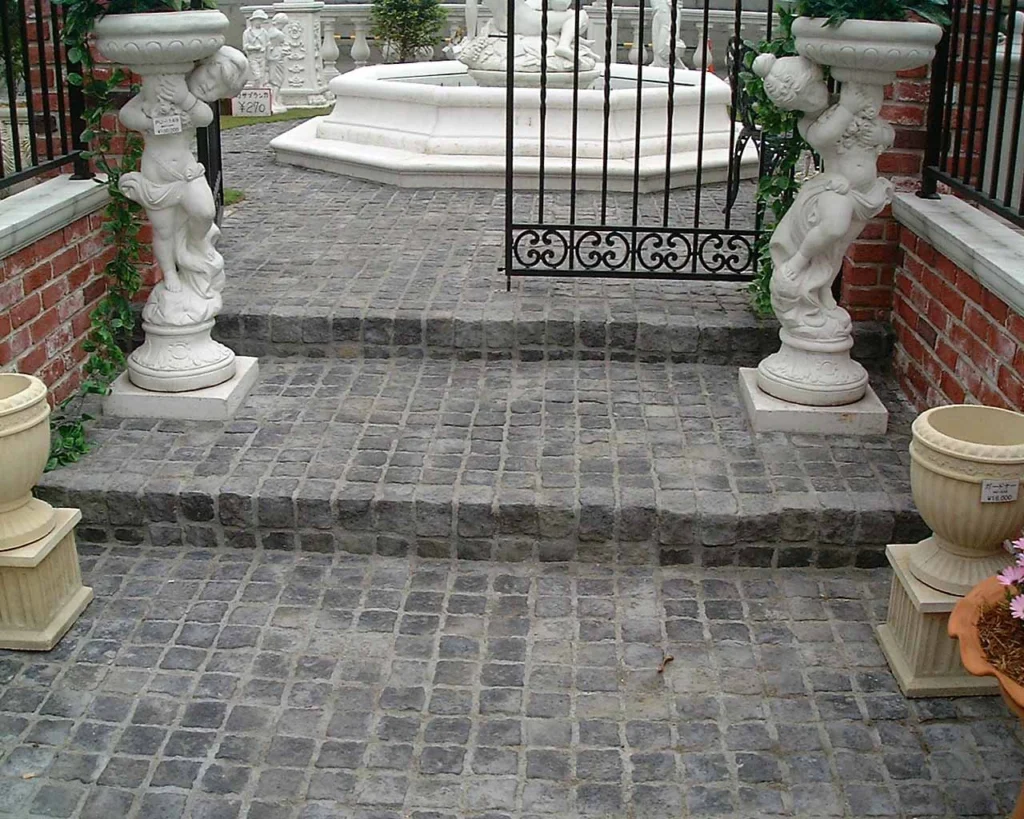
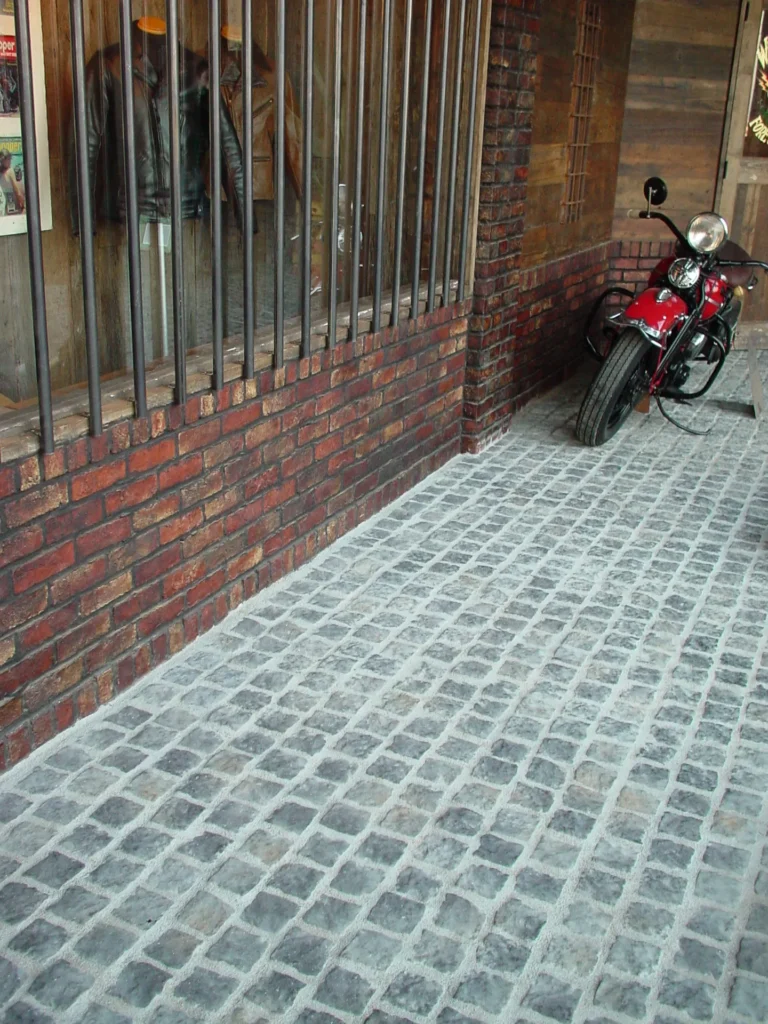
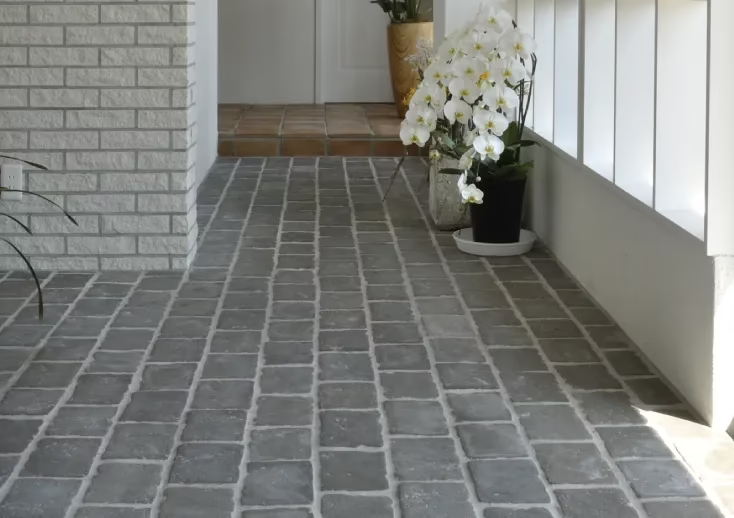
“CUBIC” is a paver-look floor material with the feel of a European cobbled street. It works across a wide range of settings, from a house entrance to a garden terrace, parking area, or landscape project.
602
CUBIC Trad Type T-602 Flat
- Joint Color
- Gray
- Joint Finish
- Joint Pattern
- Running Bond
 Flat(Trad-Type)
 Flat(Grid-Type)
 Corner
 Box
Box
 Curb stone
Our works
Case Studies
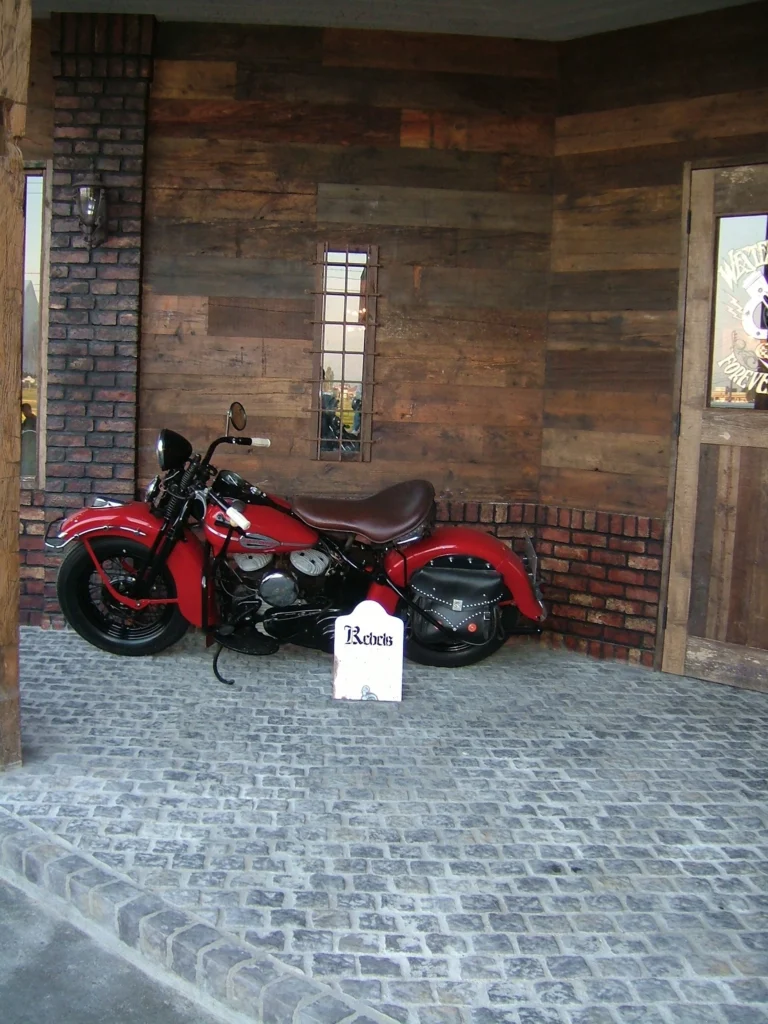
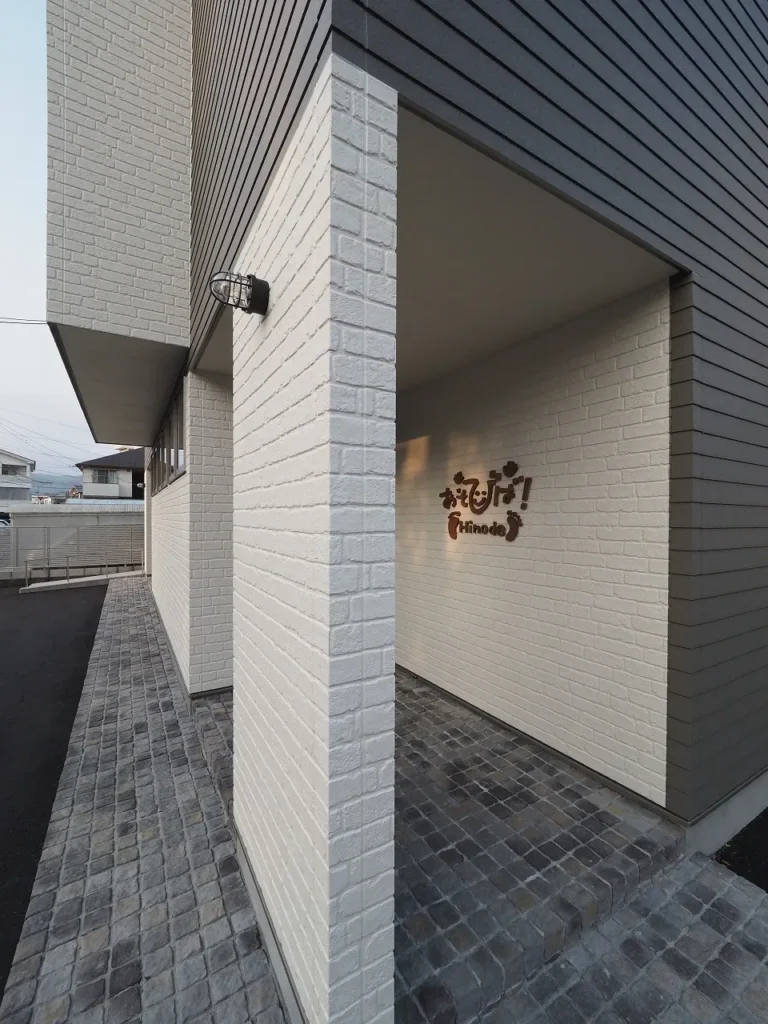
Product details
– The difference between “Trad-Type” and “Grid-Type” –
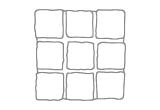
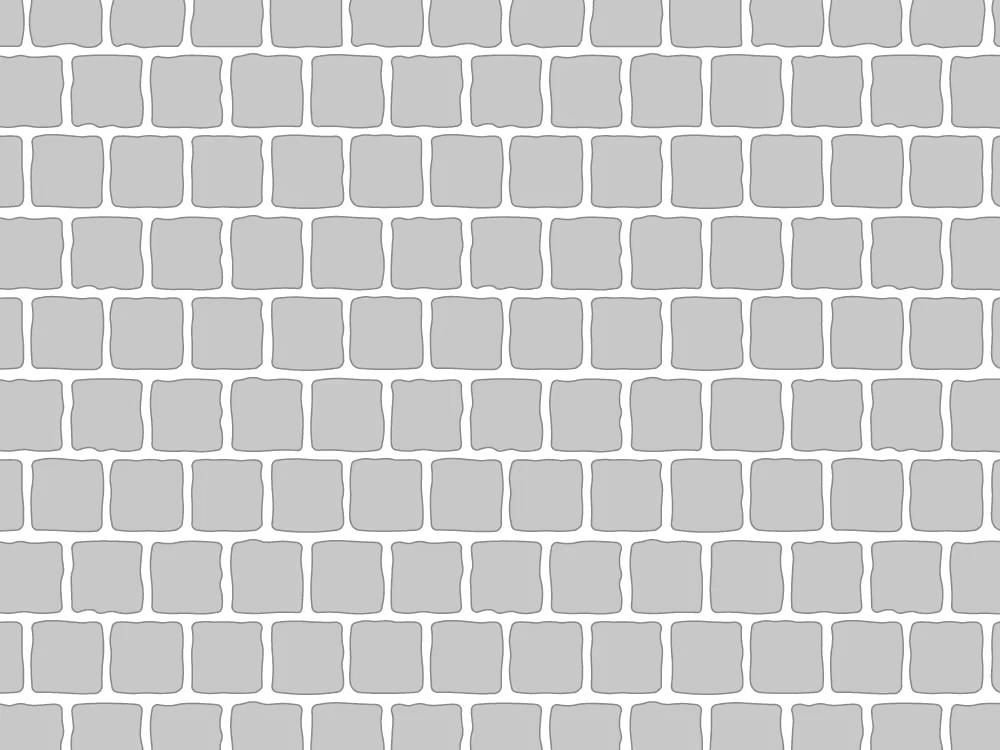
Trad-Type Two shapes make up one set. Laid alternately, they produce a running bond. | Grid-Type A single shape, which produces a stack bond. |
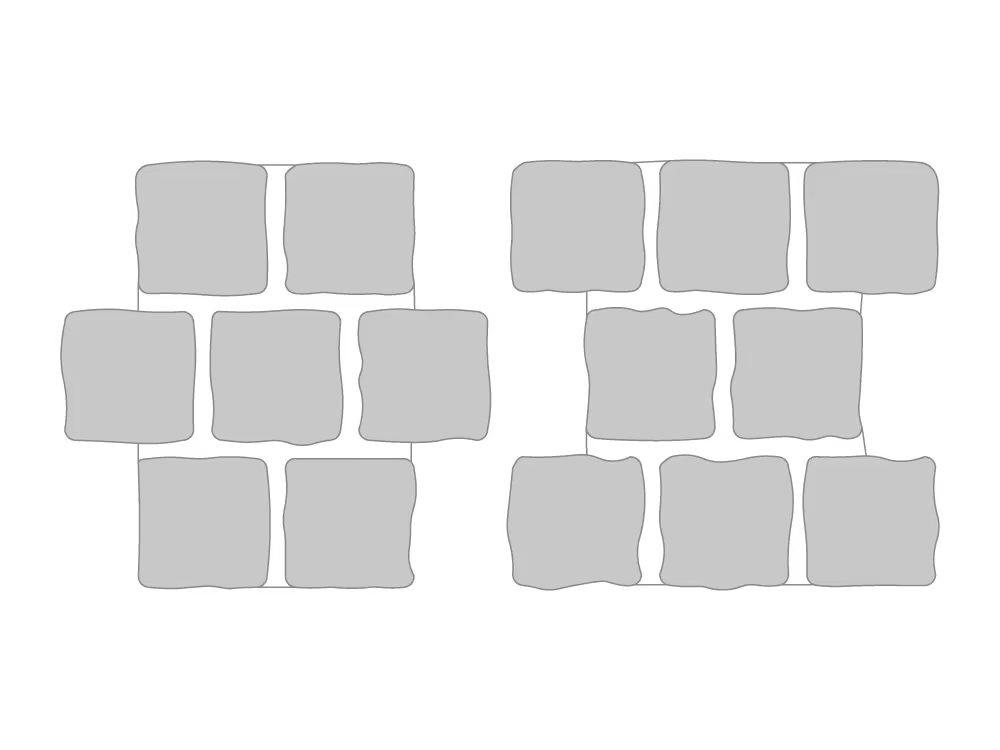 | 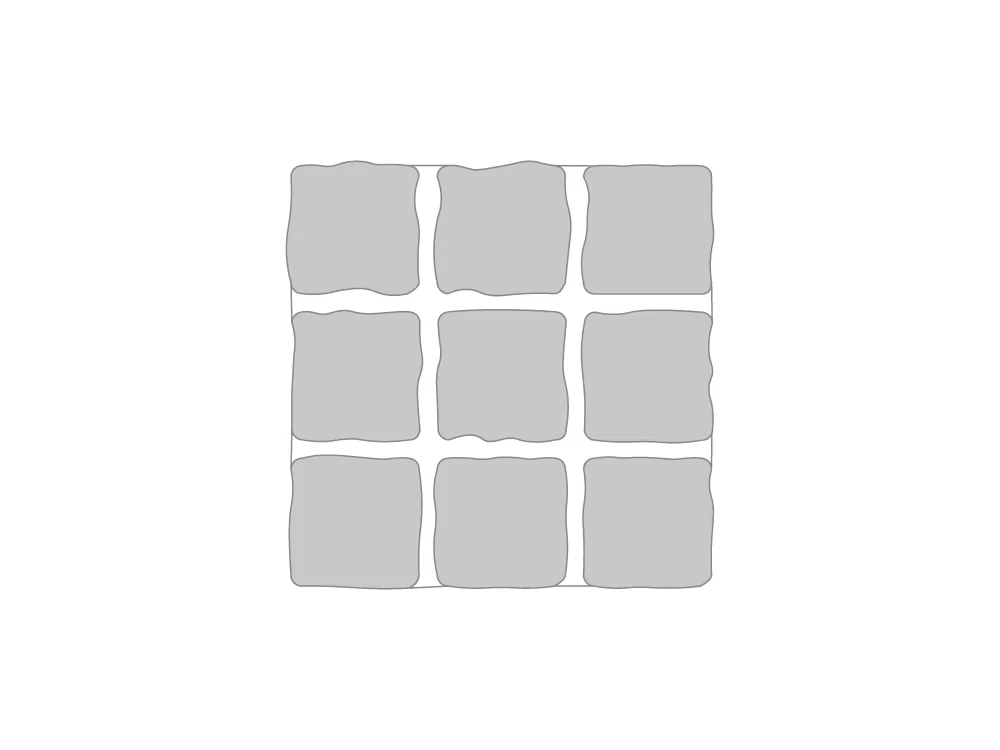 |
 |  |
Manual
How to install CUBIC

1
Trowel bonding mortar for exterior floor tile onto a smooth, level substrate.
Note: Do not work in the rain; choose a day with good weather. Stop work if temperatures are expected to fall below 5℃ during installation or curing.
2
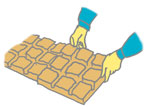
Set the pieces into the mortar bed as you would any large-format floor tile.
Note: Beat the pieces down firmly with a rubber mallet while adjusting the level, so that no voids are left behind the CUBIC.
3
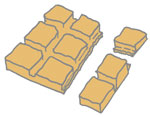
When the layout calls for cut pieces, cut through the joint sections of the product. Angled cuts can also be made with a tile cutter.
4
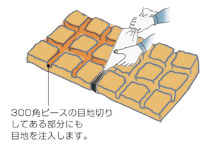
Fill the joints with MT-MEJI jointing mortar, using a grout bag or similar tool.
Once the mortar has set to a half-dry state, tool it with a jointer. Roughing up the surface with a bamboo whisk or brush gives the joint a weathered look.
Protect the work thoroughly until the mortar and jointing mortar have hardened.
Precaution
Important Notes
・Open several cartons and mix the pieces as you install.
・Please check stock availability before placing an order.
・Specifications, prices, and colors are subject to change without notice.
Installation notes
・Thickness varies from piece to piece. Excessive unevenness is a trip hazard.
・Always dry-lay the pieces first and use adhesive to take up any difference in level.
・For exterior work we recommend “REPEL・S” penetrating water repellent to guard against staining, deterioration, and efflorescence.
About efflorescence
・Precast concrete products can develop efflorescence, a white bloom on the surface.
FAQ
FAQ
Q1. Can CAN’FLOOR be used on exterior floors?
Yes, in principle it can.
To keep it looking its best, we recommend using it together with our ancillary material “REPEL S” (penetrating water repellent).
Q2. Can CAN’FLOOR be used on interior floors?
The surface is textured, so please avoid using it on interior floors in homes. It can be used in commercial facilities and similar settings.
Q3. Is CAN’FLOOR an imported product?
No. It is made in Japan.
Every piece is made by hand by our craftsmen at our in-house factory in Japan, so we can still supply matching material if repairs are needed years later.
Q4. Can CAN’FLOOR be used in a parking area?
If you are considering this application, please talk to us first.
Q5. Is there a risk of the product being discontinued?
No. Even if we do discontinue a product for our own reasons, we can produce it again at our own factory.
You can specify it with confidence, knowing that material will be available if repairs are needed.
Q6. Is CAN'FLOOR noncombustible? Please tell me the certification number.
Other items
Tiles
CONTACT
General Inquiries