

Can Brick Tile Be Used on Wood-Stove and Fireplace Walls? A Heat-Resistance and Installation Guide for Cement-Based Brick Tile and Manufactured Stone Veneer
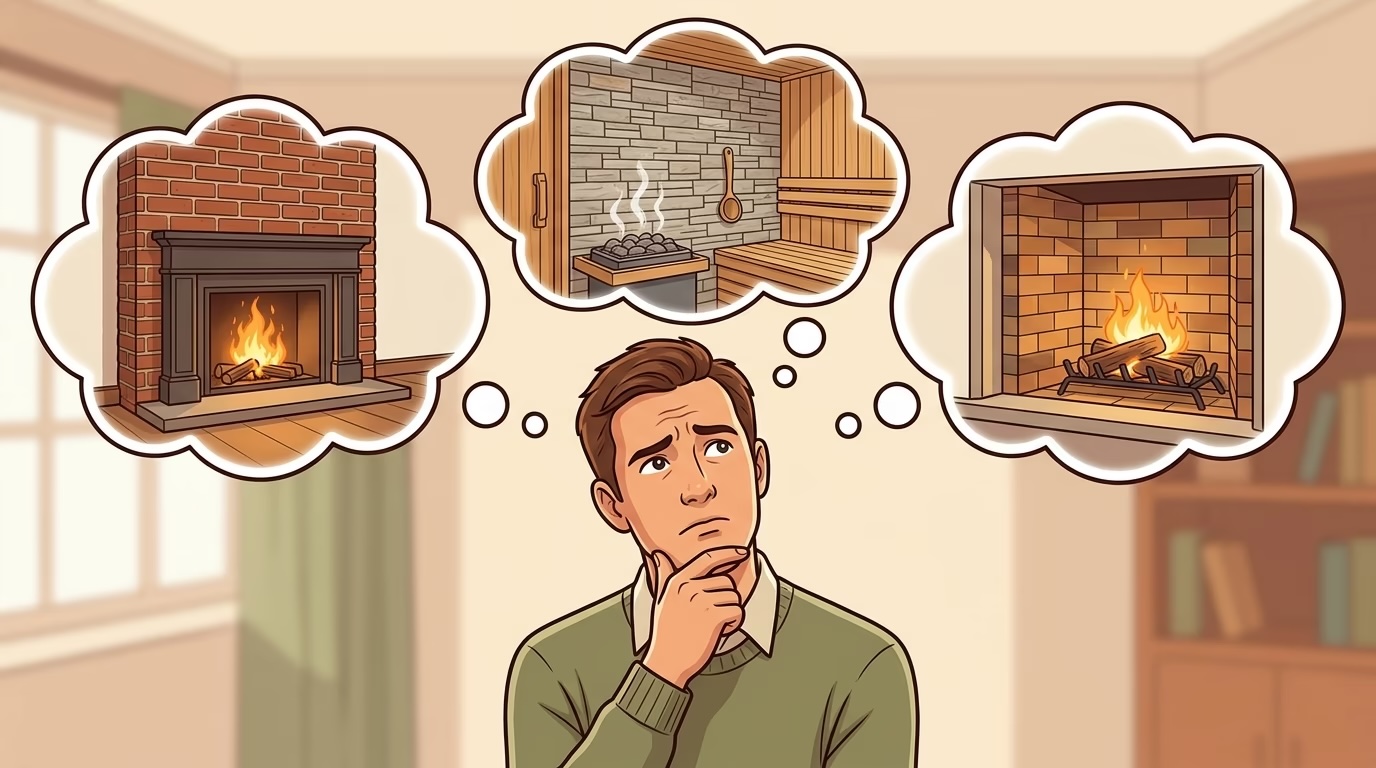
“I want to tile the firebox wall of my wood stove with brick tile,” “I want to use brick tile for the decorative wall around my fireplace,” “I want to use manufactured stone veneer for the interior wall of my sauna” — we receive many inquiries like these from architects, designers, and contractors working on homes and commercial facilities.
Based on our own in-house test data and installation track record, this article explains in detail whether our products can be used in high-temperature locations, how to choose the right adhesive, and key points to watch during installation.
*The information in this article concerns products manufactured by CAN’ Enterprises Co., Ltd. For products made by other companies, please contact the respective manufacturer. *The heat-resistance temperatures noted here are approximate and may vary depending on the usage environment and installation conditions. For critical applications, we recommend testing with a sample beforehand.
Table of Contents
Heat Resistance of Cement-Based Tile (Brick Tile and Manufactured Stone Veneer)
Comparison Table of Heat-Resistance Temperatures by Adhesive
Quick Guide by Application: Can You Use It or Not?
Installation Precautions and Key Points
Frequently Asked Questions (FAQ)
1. Heat Resistance of Cement-Based Tile (Brick Tile and Manufactured Stone Veneer)
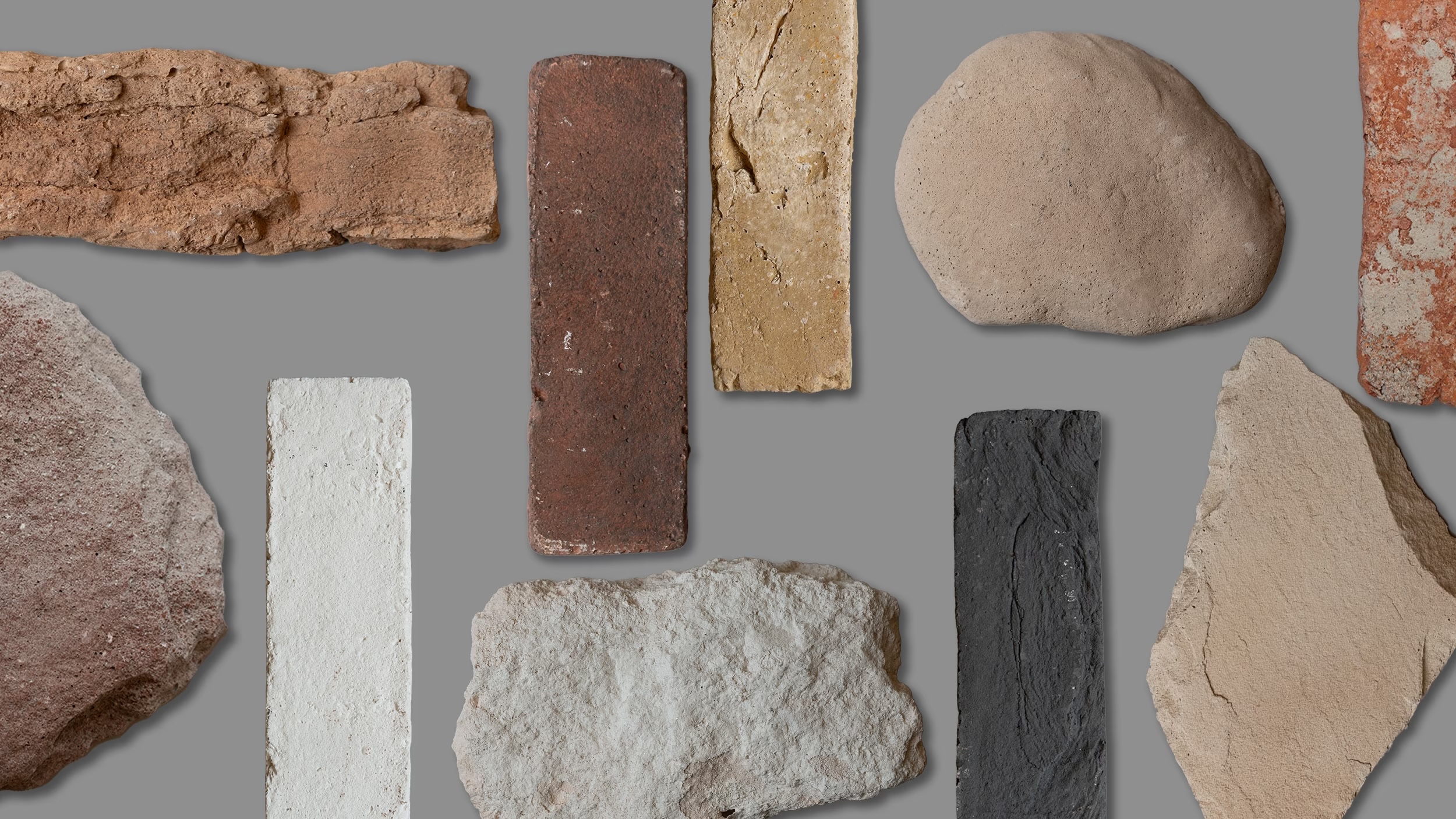
Cement-based tile, represented by products such as CAN’BRICK and CAN’STONE, is made primarily from cement and aggregate. To determine whether it can be used on the heat-shield wall of a wood stove or around a fireplace, you need to consider the heat resistance of the tile itself and the adhesive separately.
Heat Resistance of the Tile Itself
Cement and mortar are generally said to begin gradually deteriorating from around 150°C. As the hydration products in the cement start to dehydrate, this can cause a loss of strength and cracking.
However, this applies to prolonged, continuous exposure to high heat. Over short periods, no issues occur even up to around 400–500°C. Since wood stoves and fireplaces are typically not “constantly hot” but rather experience “temporary temperature rises during use,” cases where the tile itself becomes a problem are limited.
The Bottleneck Is the “Adhesive”
What actually becomes a problem in high-temperature locations is not the tile itself but the heat-resistance temperature of the adhesive (bonding material). Common resin-based adhesives lose bonding strength at relatively low temperatures, so using a resin adhesive near a wood stove carries a risk of the tile coming loose.
Choosing the right adhesive determines the success or failure of installation in high-temperature locations.
2. Comparison Table of Heat-Resistance Temperatures by Adhesive

Below is a summary of the heat resistance of the main adhesives used to install our products.
Adhesive Name | Type | Heat-Resistance Temperature (Approx.) | Suitability for High-Temperature Locations |
Resin-based adhesive | Approx. 50°C | Not suitable | |
Resin-based adhesive (flexible) | Approx. 80°C | Not suitable | |
Combidan (Haneda Chemical) | Cement-based flexible mortar | Approx. 100°C | Conditionally suitable |
KMC Flexible Resin Mortar (Better 25kg + Hardener) | Mortar-based | Approx. 150°C | Recommended |
Asahi Caster CA-13T (AGC Ceramics) | Refractory castable | Approx. 1,400°C | Specialized for extreme heat |
Point: For the heat-shield wall of a wood stove or the area around a fireplace, KMC Flexible Resin Mortar is the most well-balanced choice. It combines heat resistance (approx. 150°C) with the workability characteristic of cement-based materials (good trowel spread, can be cleaned with water). Asahi Caster can handle extremely high temperatures (such as inside a firebox), but it is overspec for ordinary decorative applications.
3. Quick Guide by Application: Can You Use It or Not?
Installation on a Wood Stove Heat-Shield Wall (Firebox Wall)
Usable
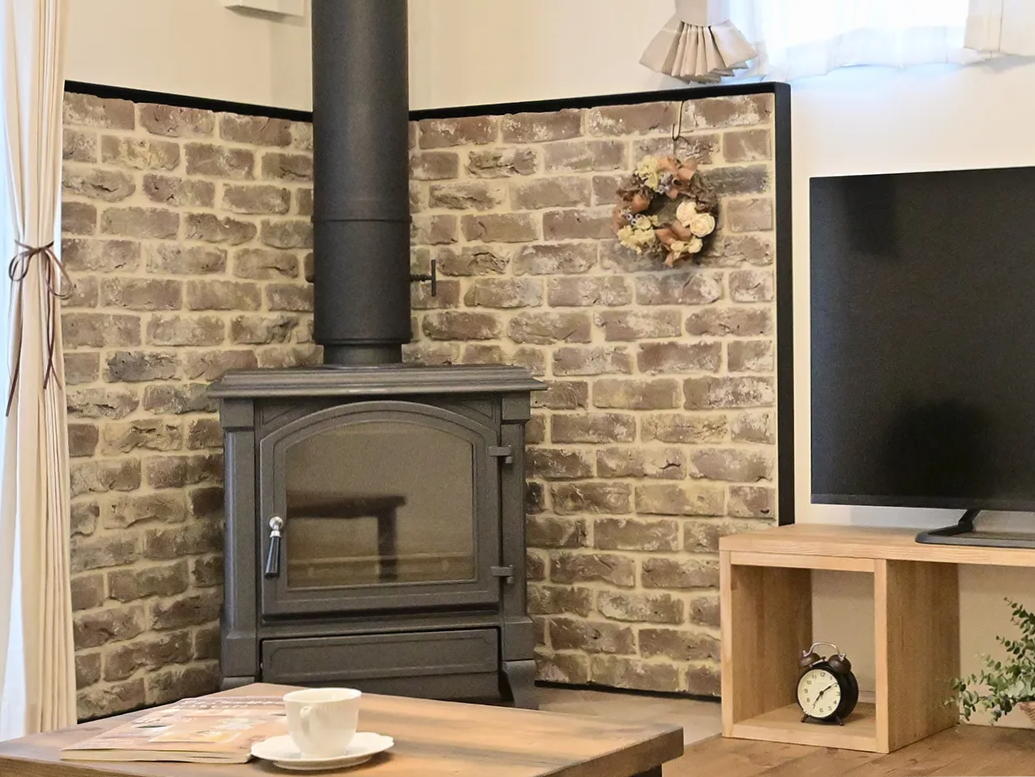
Expected surface temperature: approx. 100–200°C
Recommended adhesive: KMC Flexible Resin Mortar
Ensure adequate clearance from the stove
Substrate: lath-cut board plus mortar coating is standard
Both CAN’BRICK and CAN’STONE can be used
Being significantly lighter than real brick, it is also advantageous for retrofitting onto existing walls
Decorative Wall Around a Fireplace
Usable
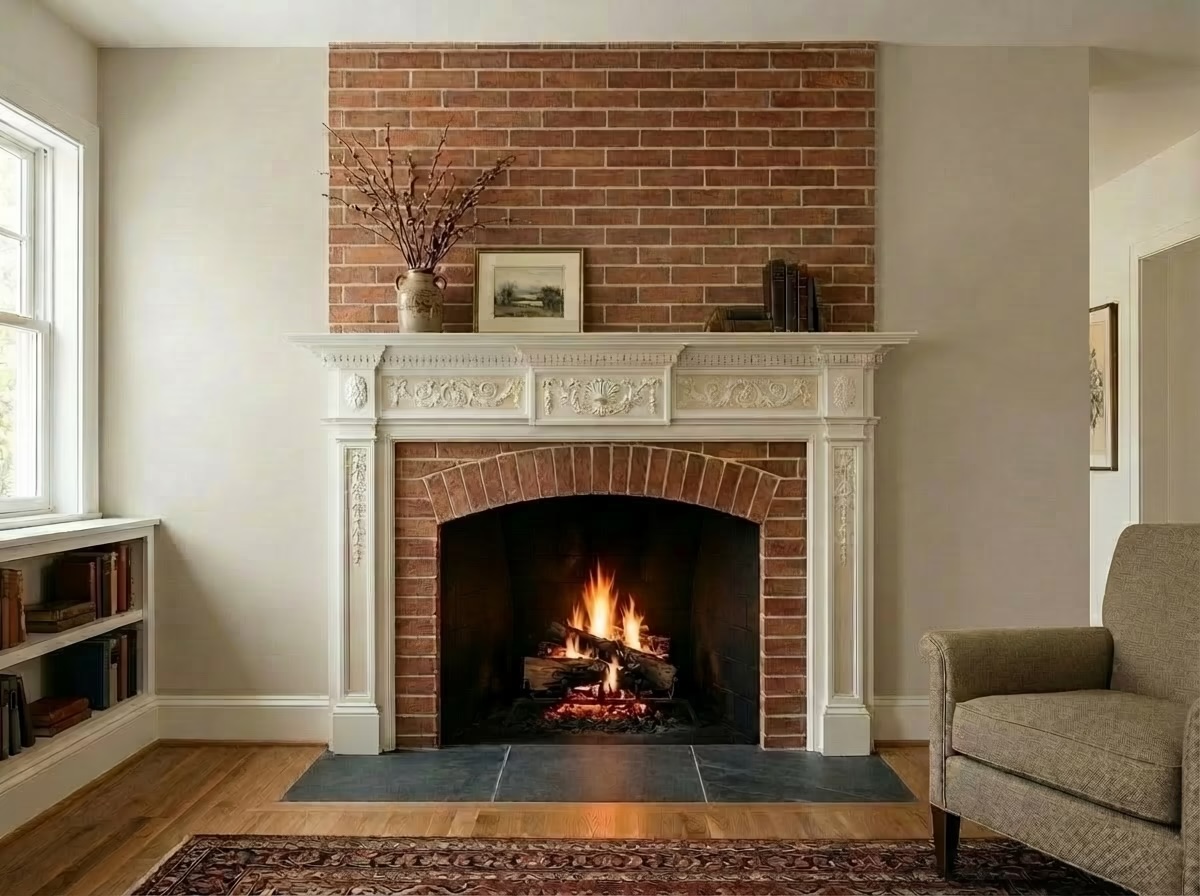
Expected surface temperature: approx. 80–150°C
Recommended adhesive: KMC Flexible Resin Mortar
Ideal for decoration around a mantelpiece
Applies to wall surfaces with adequate clearance from the fireplace body
Sauna Interior Wall Material
Conditionally usable
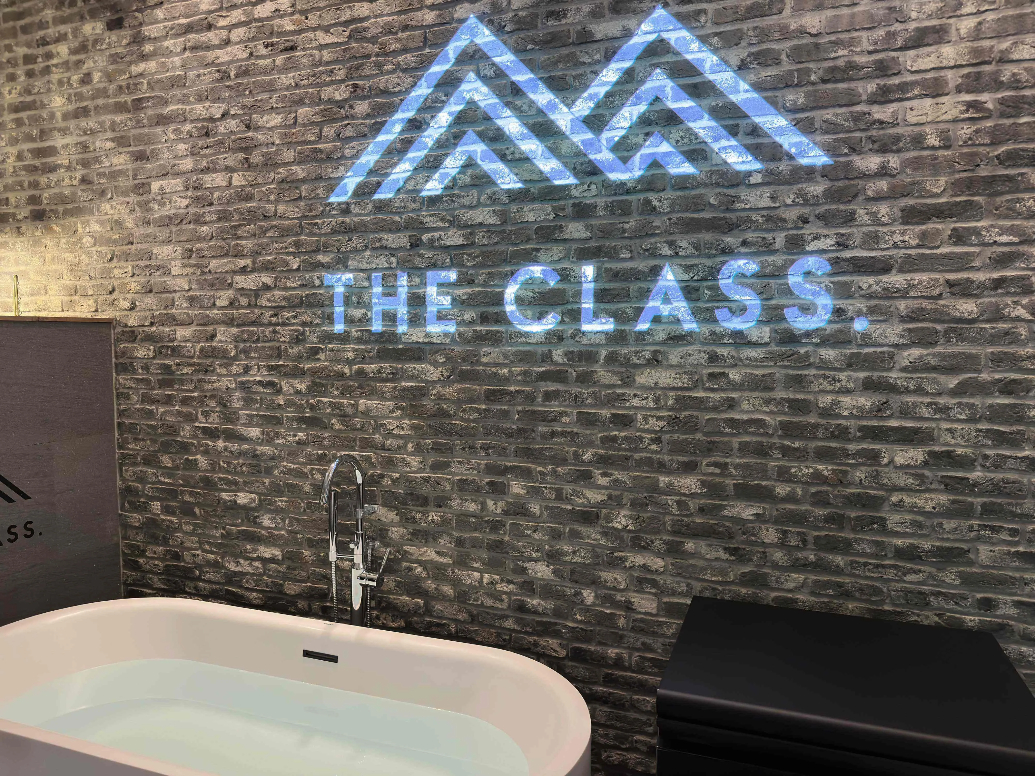
Expected temperature: approx. 80–100°C
Recommended adhesive: Combidan (approx. 100°C) or KMC (approx. 150°C)
Adhesive selection must also account for the humid environment created by steam
Avoid areas immediately adjacent to the heater
The sense of weight and texture of brick tile or manufactured stone veneer greatly enhances the atmosphere of a sauna space
Fireplace Firebox Interior and Surfaces in Direct Contact with Flame
Not recommended
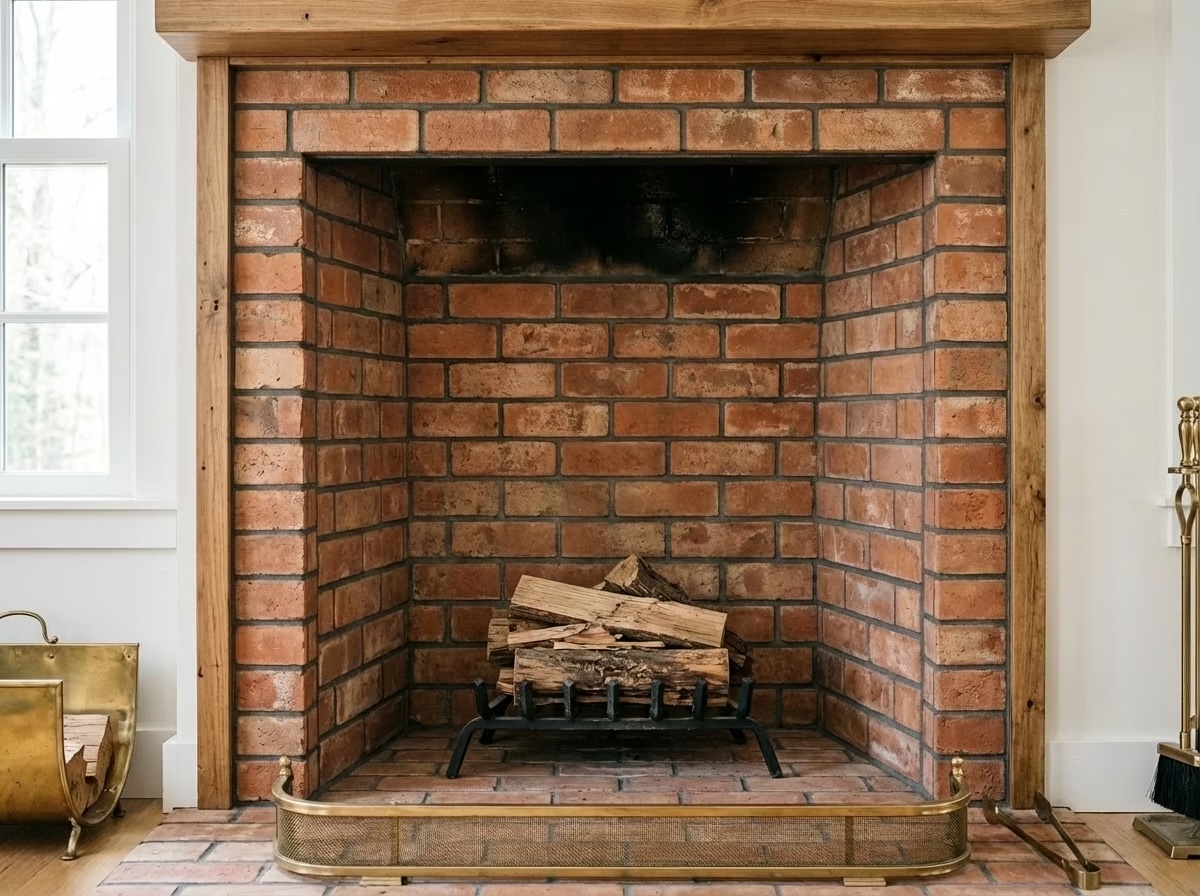
Expected temperature: 500°C or higher
Exceeds the normal operating temperature of cement-based tile
Refractory brick or refractory castable is appropriate
For the firebox interior, please use a refractory material specified by the manufacturer
4. Installation Precautions and Key Points
① Check the Surface Temperature in Advance
With the wood stove or fireplace actually running, measure the surface temperature of the area where you plan to install tile. This can easily be measured with a non-contact infrared thermometer (available for a few thousand yen at a home improvement store). We recommend confirming that the temperature is 200°C or below before finalizing your installation plan.
② Avoid Sudden Temperature Changes
Cement-based products are vulnerable to sudden temperature changes. For a newly installed wood stove or fireplace, run it on a low flame for the first several uses to gradually break it in, allowing the tile and adhesive to adapt to temperature changes over time.
③ Choose a Mortar-Based Jointing Mortar as Well
Not just the adhesive — the heat resistance of the jointing mortar is another point that’s easy to overlook. In high-temperature locations, use a cement-based jointing mortar rather than a resin-based one.
④ Confirm Fire-Safety and Building Code Requirements
Installing a wood stove or fireplace is subject to clearance-distance and non-combustible-material requirements under the Building Standards Act and the Fire Service Act. Separately from the tile’s design, be sure to confirm with your architect or contractor that the substrate configuration meets all legal requirements. Choosing a CAN’ product is strictly a choice of finish material — fire-safety performance depends on the overall design of the substrate and structure.
6. Frequently Asked Questions (FAQ)
Q. Can brick tile be used on the heat-shield wall (firebox wall) of a wood stove?
A. Yes, it can be used. Provided that adequate clearance is maintained between the wood stove and the wall, it can be installed using a combination of cement-based tile and a mortar-based adhesive in any area where the surface temperature stays at or below 200°C. Because it is lighter than real brick, it is also suitable for renovating existing walls.
Q. Can brick tile be used for the decorative wall around a fireplace?
A. Yes, it can be used under certain conditions. Cement-based brick tile itself shows no issues up to around 400–500°C over short periods. By using a mortar-based adhesive (heat resistance of 150°C or higher), it can be safely adopted as a decorative wall around a fireplace. We do not recommend installation inside a firebox where it would come into direct contact with open flame.
Q. Can brick tile or manufactured stone veneer be used as sauna interior wall material?
A. The temperature inside a typical sauna room is around 80–100°C, which is within the heat-resistance range of cement-based tile. For the adhesive, use a heat-resistant product such as Combidan (heat resistance approx. 100°C) or KMC Flexible Resin Mortar (heat resistance approx. 150°C). However, adhesive selection must also account for the humid environment created by steam.
Q. Can I install tile around a wood stove using a common resin-based adhesive (such as MT-BOND)?
A. We do not recommend it. MT-BOND loses bonding strength at around 50°C, and even MT-BOND-FLEX loses strength at around 80°C. For locations where high temperatures are expected, such as around a wood stove or near a fireplace, use a mortar-based adhesive (such as KMC Flexible Resin Mortar or Asahi Caster).
Q. Is there a difference in heat resistance between CAN’BRICK and CAN’STONE?
A. Since both CAN’BRICK and CAN’STONE are cement-based products, there is no significant difference in the heat resistance of the tile itself. Both begin to gradually deteriorate from around 150°C, and show no issues up to around 400–500°C over short periods. It is important to select the appropriate adhesive and installation method according to the intended use.
Q. Which is more suitable around a wood stove — real brick or cement-based brick tile?
A. Both can be used, but cement-based brick tile offers the advantages of being lightweight, thin, and easy to work with. In particular, for retrofitting onto existing walls, cement-based brick tile is advantageous because it places less load on the wall. However, in locations directly adjacent to the stove where temperatures exceed 300°C, fired clay brick offers superior heat resistance.
Please Consult Us About Tile Installation in High-Temperature Locations
For architects, designers, and contractors considering installation on a wood-stove heat-shield wall, around a fireplace, or in a sauna: we will propose the optimal product, adhesive, and substrate configuration for your specific usage environment.
Technical Consultation & Sample Requests →
*The information in this article concerns products manufactured by CAN’ Enterprises Co., Ltd. For products made by other companies, please contact the respective manufacturer. *The heat-resistance temperatures noted here are approximate and may vary depending on the usage environment and installation conditions. For critical applications, we recommend testing with a sample beforehand.


CONTACT
General Inquiries