

How to Choose Brick Tile: Points for Achieving Your Ideal Space
To begin, brick has long been used as a building material both in Japan and around the world. In Japan, the Red Brick Warehouse in Yokohama is a well-known example. To recreate the look of brick, brick tile has been adopted in many settings to bring character to a space. To avoid situations where actual bricklaying isn’t possible, or the added cost that comes with laying brick, brick tile — which can simply be applied to a wall surface — has become a valuable tool in space design. This article walks through, step by step, how to choose the right brick tile.
1. Introduction
2. Types and Characteristics of Brick Tile
Precast Concrete Product
Thin Brick
3. Choosing the Shape and Color of Brick Tile
Red Brick-Tone Brick Tile
Brown-Tone Brick Tile
Black Brick-Tone Brick Tile
White Brick-Tone Brick Tile
4. Creative Brick Tile Laying Patterns
Running Bond
English Bond
French Bond
English Garden Wall Bond
American Bond
Random Bond
5. Buying Guide for Brick Tile
Trusted Manufacturers and Brands
How to Choose Where to Buy, and What to Watch For
Online Store vs. Direct from the Manufacturer
Ordering Samples
1. Types and Characteristics of Brick Tile
Precast Concrete Product
Precast concrete brick tile recreates the surface look of brick using a cement-based product. This type of brick tile has the following characteristics.
Lightweight: Because it’s made with cement, it comes out lighter than real brick, reducing the load placed on a building.
Durability: Thanks to the properties of cement, it offers high durability and suits exterior walls and high-humidity locations.
Cost Performance: Manufacturing costs are relatively low, making it an economical choice. It’s a popular material that combines decorative appeal with functionality.
Design Variety: Using cement allows for a wide range of designs and color variations, so you can choose a look that matches any interior style. Like real brick, it develops character with age, and you can enjoy the way its beauty changes over time.
Thin Brick
Thin brick is tile made by slicing real brick into thin pieces, and it has the following characteristics.
Authentic Texture: Because it’s made from real brick, it has a natural texture and color, letting you enjoy the same feel as an actual brick wall. It’s ideal when you want a vintage or classic atmosphere.
Thickness: Thin brick is relatively thin, so it makes efficient use of space. You can bring in the look of brick even in tight spaces.
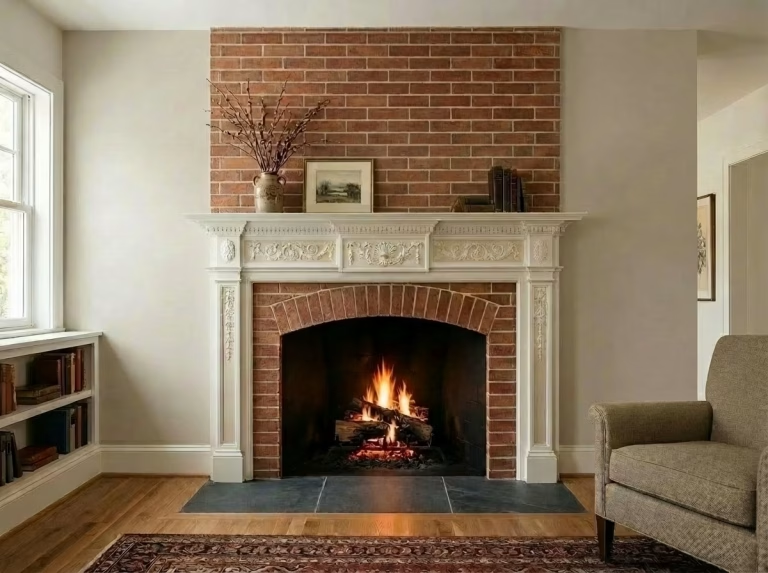
Fire Resistance: Since it’s made from a section of real brick, it offers excellent fire resistance. It’s well suited to areas exposed to heat, such as around fireplaces or kitchen backsplashes.
Natural Coloring: Thin brick has natural coloring that grows even more characterful with age. You can enjoy the way its beauty changes over time.
2. Choosing the Shape and Color of Brick Tile
Brick tile isn’t just one thing — there are actually many types and shapes. Depending on the country of origin, the color and manufacturing method differ, which in turn changes the surface expression. Here we introduce a few types of brick tile.
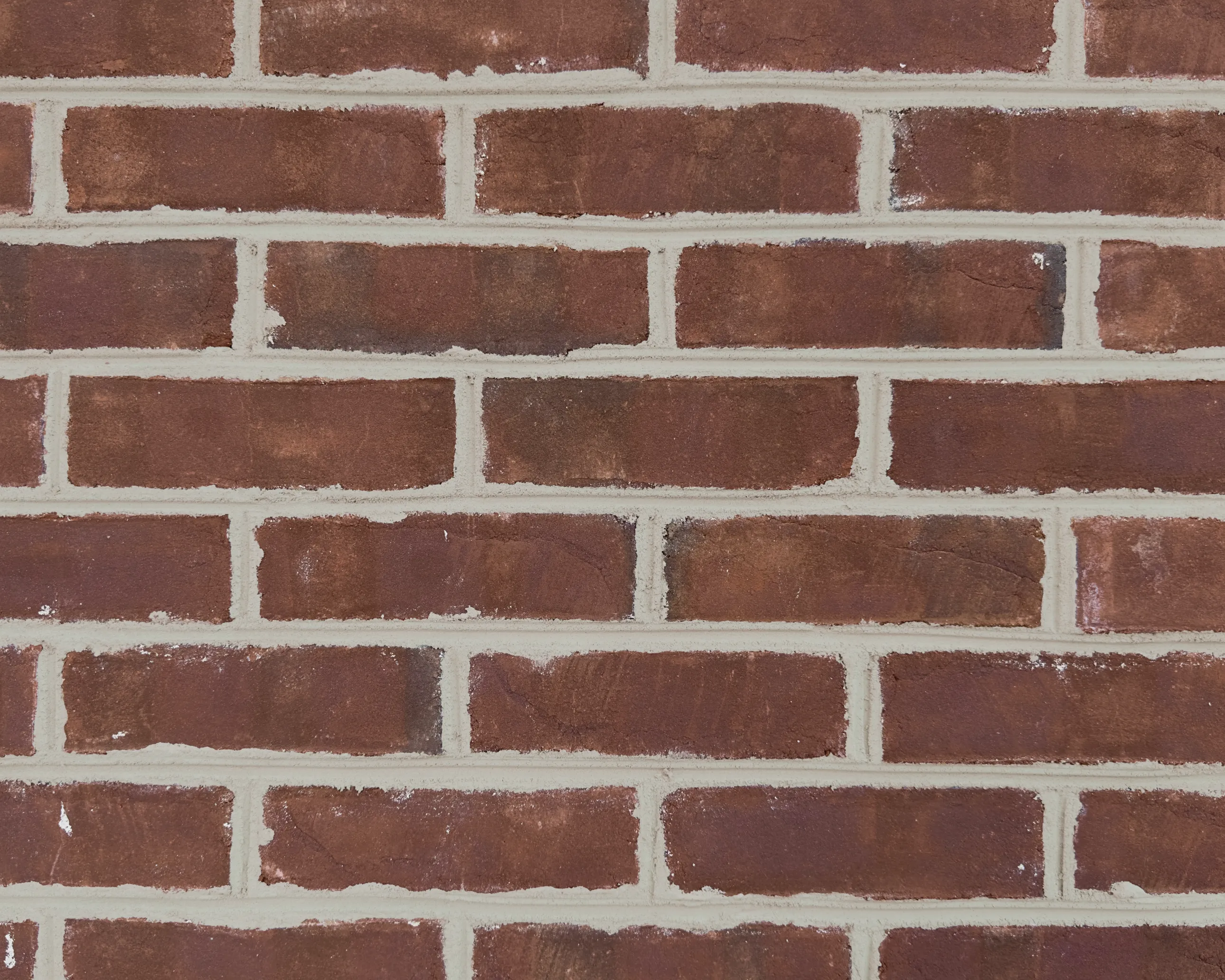
Red Brick-Tone Brick Tile ENGLAND (ENG-1) | Brown-Tone Brick Tile CAMBRIDGE (CB-2) | Black Brick-Tone Brick Tile KURO BRI (BK-1) | White Brick-Tone Brick Tile SHIRO BRI (WH-3) |
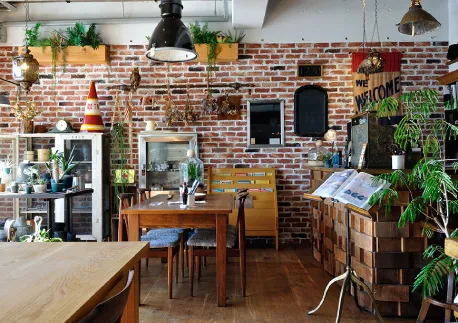 A classic, warm red brick. With its traditional feel, this versatile design suits any space. | 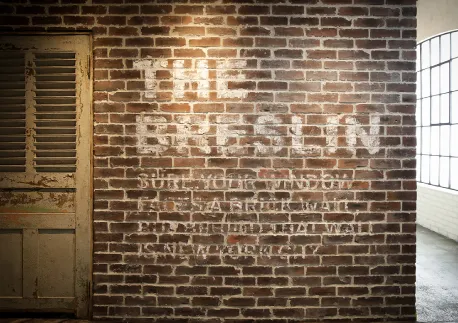 For shop interiors, exterior walls, studies, and more. | 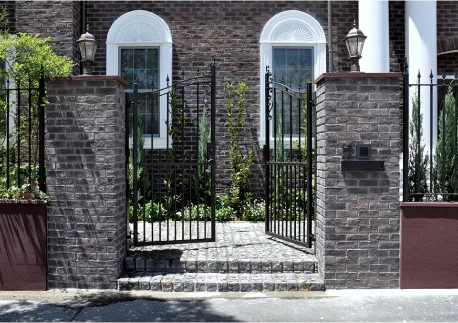 As an accent for modern offices, shop facades, and living rooms. | 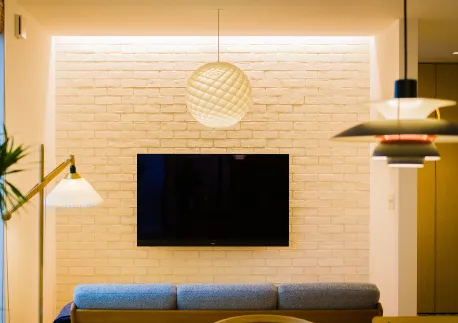 Matches any space, from living rooms to kitchens and bathrooms. |
3. Creative Brick Tile Laying Patterns
By varying how brick tile is laid, the same tile can create an entirely different impression. Here we introduce laying patterns that make the most of this design versatility, adding a distinctive style to any space.
A Variety of Laying Patterns
1. Running Bond
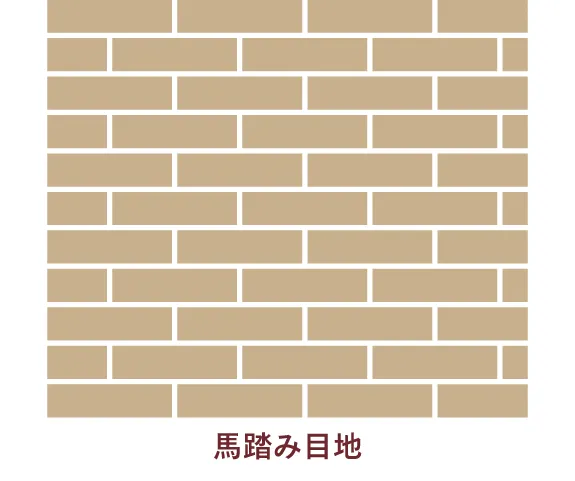
• Characteristics: Each row of tile is offset by half a tile from the row below. This is the most common laying pattern.
• Effect: Gives a sense of stability and a classic atmosphere that harmonizes with any space. It’s also highly durable, suiting both exterior and interior use.
2. English Bond
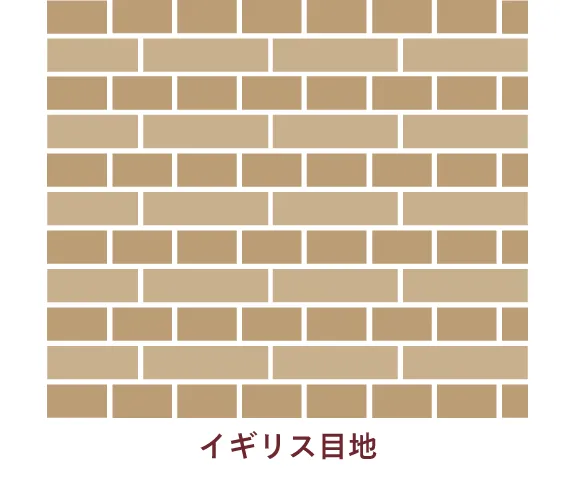
• Characteristics: A pattern that alternates long and short tiles course by course, combining them within each row
to form the finished layout.
• Effect: A visually rhythmic, dynamic design. It preserves the traditional look of brick tile while also suiting modern interiors.
3. French Bond
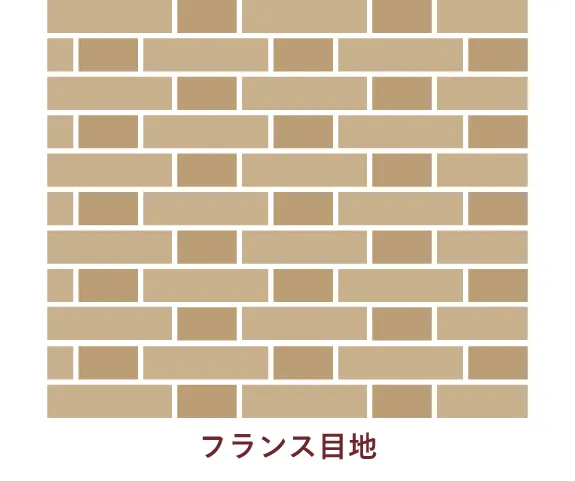
• Characteristics: Long and short tiles are alternated, with the arrangement changing row by row.
• Effect: Creates an elegant, refined design. It’s a perfect fit for French-style café and restaurant interiors.
4. English Garden Wall Bond
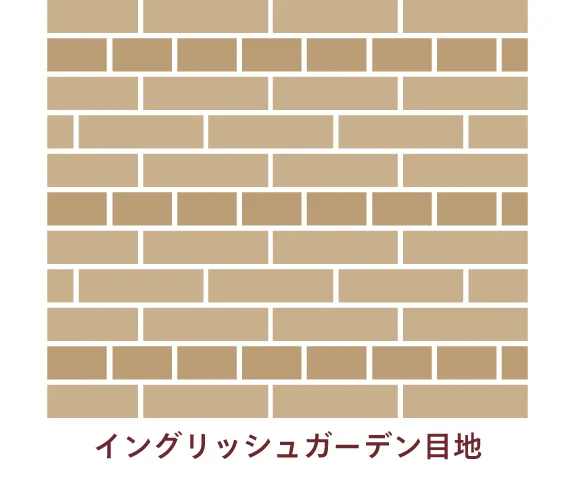
• Characteristics: Tiles in each row are placed randomly, in a pattern that emphasizes a natural look.
• Effect: Creates a casual, relaxed atmosphere, making it ideal for outdoor spaces such as gardens and terraces.
5. American Bond
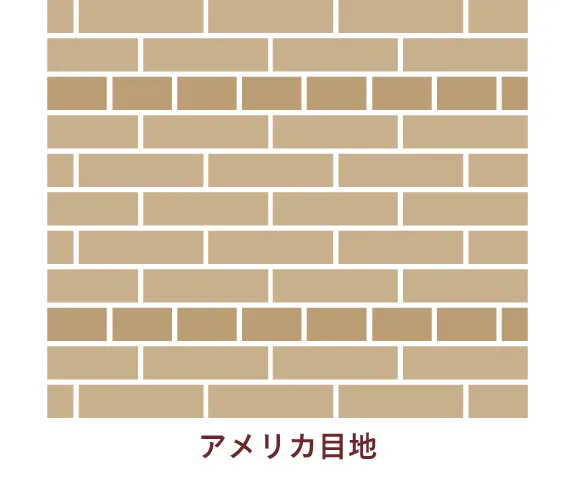
• Characteristics: Each row of tile is offset by a quarter-tile. This is a variation on running bond.
• Effect: Keeps a traditional feel while also harmonizing with modern interiors. It suits spacious rooms such as living and dining rooms.
6. Random Bond
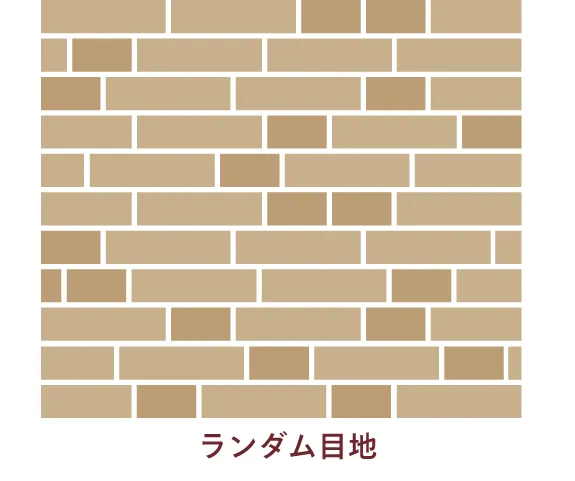
• Characteristics: Tiles are placed randomly, in a pattern that emphasizes a natural look.
• Effect: Has a natural texture and distinct character, creating a casual space with an artistic feel. Ideal for an interior accent wall.
4. Buying Guide for Brick Tile
When buying brick tile, it’s important to choose a trusted manufacturer or brand. Here we explain how to choose where to buy, what to watch for, and how to order samples. In particular, we recommend CAN’BRICK from CAN’ Enterprises.
Manufacturers and Brands
The quality of brick tile varies greatly between manufacturers and brands. Choosing a trusted manufacturer helps you get tile with excellent durability and design.
CAN’BRICK from CAN’ Enterprises
• Characteristics: CAN’ Enterprises is a highly reliable manufacturer providing high-quality brick tile, known for its wide range of designs and excellent durability.
• Why We Recommend It: Domestic production ensures a stable supply, and strict quality control produces high-strength tile. Its use of environmentally conscious materials is another appealing point.
How to Choose Where to Buy, and What to Watch For
When purchasing brick tile, keep the following points in mind.• Choose a Trusted Retailer: Buying from an established store or a manufacturer’s own outlet gives you access to quality assurance and after-sales support.
• Check Reviews and Ratings: Reading other buyers’ reviews and ratings lets you gauge reliability and quality in advance.
Online Store vs. Direct from the Manufacturer
Each purchasing method has its own advantages and disadvantages.
Online Store
Advantages: You can order easily from home and compare a wide range of options. Prices are also often relatively low.
Disadvantages: Since you can’t see the actual product, the color or texture may differ from what’s shown in photos. You also often can’t get advice on installation or what else you’ll need.
Direct from the Manufacturer
Advantages: You can hold and check actual product samples, and get advice from specialist staff. You can also get direct advice on installation and the tools or materials you’ll need.
Ordering Samples
We recommend ordering samples before purchasing brick tile.
The Importance of Trying Before You Buy: Checking the actual color and texture helps you form a concrete image of the finished result.
How to Check the Actual Color and Texture: Place the sample at the actual installation site and check how it works with the lighting and surrounding interior.
Choosing a trusted manufacturer and the right place to buy is the key to a successful brick tile purchase. CAN’BRICK from CAN’ Enterprises is a recommended choice, offering excellent quality and design. Be sure to order a sample and enjoy creating your ideal space.
Latest Articles
View All
CONTACT
General Inquiries